


 |
市場調查報告書
商品編碼
1996990
全球國防雷達高度計市場(2026-2036 年)Global Defense Radar Altimeters Market 2026-2036 |
||||||

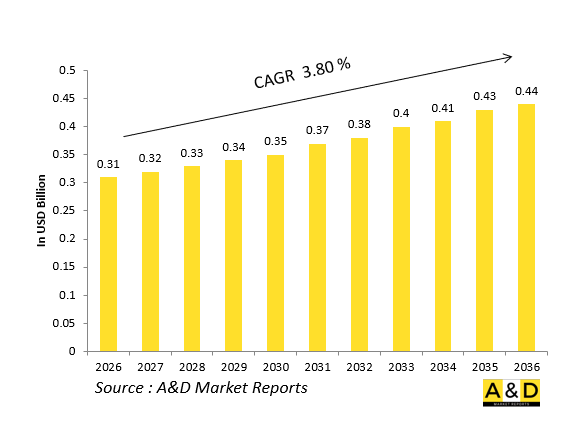
2026 年全球國防雷達高度計市場規模估計為 3.1 億美元,預計在 2026 年至 2036 年的預測期內將以 3.80% 的複合年成長率成長,到 2036 年達到 4.4 億美元。
介紹:
國防雷達高度計是一種專用的無線電高度計系統,它利用射頻訊號測量飛機和平台相對於地面或海平面的高度,為飛行安全和任務成功提供至關重要的低空淨空資料。這些高度計安裝在戰鬥機、攻擊機、海上巡邏機、特殊任務飛機、直升機和無人系統上,支援低空飛行、地形追蹤飛行以及精確進場和著陸作業。隨著各國空軍在2026年至2036年間優先進行低能見度、低空入侵任務以及日益複雜的多域飛行,國防雷達高度計市場正不斷擴大。
現代雷達高度計已從簡單的類比高度計發展成為整合數位節點,可直接向飛行控制系統、導航系統和任務電腦提供資料。這些高度表支援先進的低空入侵模式、自動地形追蹤和自動著陸程序,尤其是在低能見度條件和艦載環境下。隨著電子戰環境的日益嚴峻,對即使在強干擾環境下也能可靠運作的、堅固耐用的抗干擾雷達高度計的需求也日益成長。這些系統逐漸被視為下一代戰鬥機、教練機和無人機平台的關鍵組件,在嚴苛的作戰環境中,它們能夠提升飛機的生存能力和作戰效能。
技術對國防雷達高度計市場的影響
技術進步已將國防雷達高度計從相對簡單的測高儀器轉變為複雜的多模式軟體定義感測器。現代設備採用固態發送器、先進的數位訊號處理技術以及窄頻或調頻波形,從而提高了精度,增強了抗干擾能力,並最大限度地減少了對其他機載系統的干擾。這些改進使得雷達高度計即使在電磁環境密集的地區,例如在強大的雷達和通訊發射機附近,也能可靠運作。
與數位飛行控制系統的整合使雷達高度計能夠支援自動低空飛行剖面、地形追蹤飛行以及精確進場和著陸模式,從而減輕飛行員的工作負荷,並提高低能見度條件下的飛行安全性。開放式架構和模組化設計允許軟體更新和配置更改,使得同一套基本硬體可用於多個平台和任務剖面。增強的網路安全和安全的資料匯流排可防止在網路化作戰環境中篡改與高度相關的資料流。此外,小型化和低耗電量使其能夠部署在更小的無人平台和專用任務吊艙上,從而實現基於高度的精確機動和遠距離作戰,而無需將主機平台直接暴露於威脅之中。這些創新共同提升了平台在低空的生存能力、任務柔軟性和作戰效能。
國防雷達高度計市場的主要促進因素
國防雷達高度計市場需求的驅動力源自於低空和地面飛行在衝突地區作為核心生存戰術的重要性。現代戰鬥機、攻擊機和特種任務平台依賴精確的即時地面高度數據,才能在崎嶇不平、障礙物密布的地形上保持安全裕度,同時飛越敵方雷達探測範圍。先進的綜合防空系統的普及進一步強化了這一需求,迫使各國空軍採用更複雜的地形掩蔽飛行剖面,並由可靠的雷達高度高度計提供支援。
另一個主要因素是海上和艦載作業的擴展。雷達高度計能夠幫助旋翼機和特種飛機進行精確的低空、航空母艦、懸停和著陸。無人作戰飛行器(UAV)和長途飛行無人機專案的擴展也催生了對緊湊、堅固的雷達高度計的需求,這些高度計需支援自主地形追蹤和避障能力。艦隊現代化和延壽計畫正在加速老舊平台的維修,使其配備與數位航空電子設備、飛行控制律和電子戰系統相容的改進型雷達高度計系統。同時,盟軍之間的互通性和標準化要求正在推動通用雷達高度計介面和資料格式的採用,從而實現後勤支援和訓練共用。安全和認證標準進一步強化了對可靠且容錯設計的必要性,以最大限度地降低低空事故的風險。
國防雷達高度計市場區域趨勢
從區域層級來看,北美仍然是先進雷達高度計研發的重要中心,這得益於其大規模的戰鬥機、攻擊機、海上巡邏機和無人機項目,這些項目都專注於低空入侵和海上作戰。美國及其合作夥伴正在投資下一代平台,其採購合約通常包括整合了自動低空飛行、海上入侵和電子戰能力的雷達高度計。
在歐洲,聯合作戰航空和多用途項目正在採用標準化的雷達高度計架構,以支援各國空軍之間的互通性和通用認證基礎。在亞太地區,隨著多個國家對其空軍進行現代化改造,並擴展其國產海上打擊和特種任務能力,對國產或聯合開發的雷達高度計解決方案的需求正在迅速成長。中東和海灣國家正在投資建造現代化或新建的飛機機隊,這些飛機配備了能夠在沙漠和海上進行低空作戰且能抵抗電子戰干擾的雷達高度計。在全部區域,人們越來越傾向於選擇緊湊型、模組化和開放式架構的雷達高度計,這種高度表可以在固定翼、旋翼、艦載和無人平台上重複使用和升級。國內供應和技術主權的政策也在推動區域設計和生產,而出口管制和安全機制則影響著高度計的部署。
本報告分析了全球國防雷達高度計市場,總結了關鍵趨勢、市場影響因素、關鍵技術及其影響、主要地區和國家的趨勢以及市場機會分析。
目錄
國防雷達高度計市場:目錄
國防雷達高度計市場:報告定義
國防雷達高度計市場:細分
依地區
依平台
依海拔範圍
依頻段
透過使用
未來十年國防雷達高度計市場分析
市場成長、發展趨勢、技術應用概述和市場吸引力等方面的詳細資訊。
國防雷達高度計市場:市場技術
預計將對市場產生影響的十大技術及其對整體市場的潛在影響。
全球國防雷達高度計市場預測
這涵蓋了上面提到的所有部分。
國防雷達高度計市場:區域趨勢與預測
本報告涵蓋市場趨勢、促進因素、阻礙因素因素、挑戰以及政治、經濟、社會和技術等因素。報告還包括詳細的區域市場預測和情境分析。區域分析最後提供了主要企業簡介、供應商簡介和公司基準數據。目前市場規模是基於典型情境估算的。
北美洲
促進因素、限制因素與挑戰
PEST分析
市場預測與情境分析
主要企業
供應商層級狀態
企業標竿管理
歐洲
中東
亞太地區
南美洲
國防雷達高度計市場:國家分析
本章將說明該市場的主要國防項目,以及該市場的最新新聞和專利申請。此外,還將說明針對特定國家的十年市場預測和情境分析。
美國
國防計劃
最新消息
專利
該市場目前的技術成熟度水平
市場預測與情境分析
加拿大
義大利
法國
德國
荷蘭
比利時
西班牙
瑞典
希臘
澳洲
南非
印度
中國
俄羅斯
韓國
日本
馬來西亞
新加坡
巴西
國防雷達高度計市場:市場機會矩陣
機會矩陣幫助讀者了解具有高機會的細分市場。
專家對國防雷達高度計市場報告的意見
請向我們的專家諮詢他們對這個市場可能進行的分析的見解。
結論
關於航空航太和國防市場報告
Global Defense Radar Altimeters Market
The Global Defense Radar Altimeters Market is estimated at USD 0.31 billion in 2026, projected to grow to USD 0.44 billion by 2036 at a Compound Annual Growth Rate (CAGR) of 3.80% over the forecast period 2026-2036.
1. Introduction:
Defense radar altimeters are specialized radio altimeter systems that measure the height of an aircraft or platform above the ground or sea surface using radio frequency signals, providing critical low altitude clearance data for flight safety and mission execution. These altimeters are embedded in fighters, attack aircraft, maritime patrol platforms, special mission aircraft, helicopters, and unmanned systems, supporting nap of the earth flying, terrain following, and precise approach and landing operations. Over the 2026-2036 horizon, the defense radar altimeter market is expanding as air forces prioritize low observable, low level penetration missions and increasingly complex, multi domain flight profiles.
Modern radar altimeters are evolving from simple analog based height meters into integrated digital nodes that feed data directly into flight control systems, navigation suites, and mission computers. They support advanced low level penetration modes, automatic terrain following, and automated landing sequences, especially in poor visibility and shipboard environments. As electronic warfare environments grow more contested, demand is rising for hardened, jam resistant radar altimeters that can operate reliably in high interference scenarios. These systems are increasingly specified as essential components in next generation combat, training, and unmanned air platforms, underpinning both survivability and operational effectiveness in demanding operational conditions.
2. Technology Impact in Defense Radar Altimeters Market
Technology is transforming defense radar altimeters from relatively basic height sensing instruments into sophisticated, multi mode, software defined sensors. Modern units leverage solid state transmitters, advanced digital signal processing, and narrow band or frequency modulated waveforms to improve accuracy, reduce susceptibility to jamming, and minimize interference with other onboard systems. These enhancements allow radar altimeters to operate reliably in dense electromagnetic environments, including near powerful radar and communications emitters.
Integration with digital flight control systems enables radar altimeters to support automated low level flight profiles, terrain following, and precise approach and landing modes, reducing pilot workload and improving safety in degraded visual conditions. Open architecture and modular designs support software updates and configuration changes, enabling the same basic hardware to be used across multiple platforms and mission profiles. Cybersecurity enhancements and secure data buses protect height related data streams from manipulation in networked combat environments. Miniaturization and reduced power consumption are also enabling deployment on smaller unmanned platforms and special mission pods, allowing precise altitude based maneuvers and standoff operations without exposing the host platform to direct threat. Collectively, these innovations enhance platform survivability, mission flexibility, and low level operational effectiveness.
3. Key Drivers in Defense Radar Altimeters Market
The defense radar altimeter market is driven by the continued importance of low level and nap of the earth flight as a core survivability tactic in contested airspaces. Modern fighters, attack aircraft, and special mission platforms rely on accurate, real time height above terrain data to fly beneath enemy radar coverage while maintaining safety margins over undulating or cluttered terrain. This requirement is further amplified by the proliferation of advanced integrated air defense systems, which push air forces to adopt more complex, terrain masking flight profiles supported by robust radar altimeters.
Another key driver is the growth of maritime and shipboard operations, where radar altimeters enable precise, low altitude approaches, carrier based landings, and hover and land sequences for rotary wing and special mission aircraft. The expansion of unmanned combat air and long endurance UAV programs also creates demand for compact, rugged radar altimeters that support autonomous terrain following and obstacle avoidance capabilities. Fleet modernization and life extension programs are accelerating the retrofit of legacy platforms with upgraded radar altimeter systems compatible with digital avionics, flight control laws, and electronic warfare suites. At the same time, interoperability and standardization requirements across allied forces are encouraging adoption of common radar altimeter interfaces and data formats, enabling shared logistics and training. Safety and certification standards reinforce the need for reliable, fault tolerant designs that minimize the risk of low altitude mishaps.
4. Regional Trends in Defense Radar Altimeters Market
Regionally, North America remains a leading hub for advanced radar altimeter development, supported by large scale fighter, attack, maritime patrol, and unmanned air programs that emphasize low level penetration and shipboard operations. The United States and its partners are investing in next generation platforms whose procurement contracts typically include integrated radar altimeters that support automated low level flight, maritime approaches, and electronic warfare resilient operation.
In Europe, collaborative combat air and multi role programs are favoring standardized radar altimeter architectures that support interoperability and shared certification bases across national fleets. The Asia Pacific region is witnessing rapid growth as several nations modernize their air forces and expand indigenous maritime strike and special mission capabilities, creating demand for domestically sourced or co developed radar altimeter solutions. Middle Eastern and Gulf states are investing in modernized or new build fleets whose radar altimeters must support low level over desert and maritime operations while resisting electronic warfare interference. Across these regions, there is a growing preference for compact, modular, open architecture radar altimeters that can be reused or upgraded across fixed wing, rotary wing, naval, and unmanned platforms. Domestic supply and technology sovereignty policies are also encouraging regional design and production, while export control and security regimes shape the deployment of high end altimeter variants.
5. Key Defense Radar Altimeters Market Program
Several flagship defense programs are shaping the evolution of the radar altimeter market over the 2026-2036 period. Next generation fighter and multi role combat air programs are specifying advanced radar altimeters that integrate tightly with digital flight control systems and mission computers, enabling automated low level penetration and terrain following capabilities in heavily defended airspace. Naval aviation and maritime strike programs are equipping carrier based and long range maritime platforms with radar altimeters that support precise over water flight profiles, automated approach sequences, and shipboard landing operations under adverse conditions.
Unmanned combat air and long endurance UAV programs are adopting radar altimeters to enable autonomous low level navigation, obstacle avoidance, and standoff orbiting, reducing exposure to integrated air defense systems. Rotary wing and special mission programs are relying on radar altimeters for nap of the earth insertions, mountainous terrain operations, and hover and land maneuvers in cluttered or maritime environments. Multinational and coalition level programs are standardizing radar altimeter interfaces and data formats, enabling shared software libraries, certification packages, and sustainment arrangements across partner nations. Through these programs, radar altimeters are evolving from simple height sensors into integrated, mission critical subsystems that underpin low level survivability, multi domain operations, and autonomous platform behavior.
Table of Contents
Defense Radar Altimeters Market - Table of Contents
Defense Radar Altimeters Market Report Definition
Defense Radar Altimeters Market Segmentation
By Region
By Platform
By Altitude Range
By Frequency Band
By Application
Defense Radar Altimeters Market Analysis for next 10 Years
The 10-year Defense Radar Altimeters Market analysis would give a detailed overview of Defense Radar Altimeters Market growth, changing dynamics, technology adoption overviews and the overall market attractiveness is covered in this chapter.
Market Technologies of Defense Radar Altimeters Market
This segment covers the top 10 technologies that is expected to impact this market and the possible implications these technologies would have on the overall market.
Global Defense Radar Altimeters Market Forecast
The 10-year Defense Radar Altimeters Market forecast of this market is covered in detailed across the segments which are mentioned above.
Regional Defense Radar Altimeters Market Trends & Forecast
The regional counter drone market trends, drivers, restraints and Challenges of this market, the Political, Economic, Social and Technology aspects are covered in this segment. The market forecast and scenario analysis across regions are also covered in detailed in this segment. The last part of the regional analysis includes profiling of the key companies, supplier landscape and company benchmarking. The current market size is estimated based on the normal scenario.
North America
Drivers, Restraints and Challenges
PEST
Market Forecast & Scenario Analysis
Key Companies
Supplier Tier Landscape
Company Benchmarking
Europe
Middle East
APAC
South America
Country Analysis of Defense Radar Altimeters Market
This chapter deals with the key defense programs in this market, it also covers the latest news and patents which have been filed in this market. Country level 10 year market forecast and scenario analysis are also covered in this chapter.
US
Defense Programs
Latest News
Patents
Current levels of technology maturation in this market
Market Forecast & Scenario Analysis
Canada
Italy
France
Germany
Netherlands
Belgium
Spain
Sweden
Greece
Australia
South Africa
India
China
Russia
South Korea
Japan
Malaysia
Singapore
Brazil
Opportunity Matrix for Defense Radar Altimeters Market
The opportunity matrix helps the readers understand the high opportunity segments in this market.
Expert Opinions on Defense Radar Altimeters Market Report
Hear from our experts their opinion of the possible analysis for this market.
Conclusions
About Aviation and Defense Market Reports
List of Tables
- Table 1: 10 Year Market Outlook, 2026-2036
- Table 2: Drivers, Impact Analysis, North America
- Table 3: Restraints, Impact Analysis, North America
- Table 4: Challenges, Impact Analysis, North America
- Table 5: Drivers, Impact Analysis, Europe
- Table 6: Restraints, Impact Analysis, Europe
- Table 7: Challenges, Impact Analysis, Europe
- Table 8: Drivers, Impact Analysis, Middle East
- Table 9: Restraints, Impact Analysis, Middle East
- Table 10: Challenges, Impact Analysis, Middle East
- Table 11: Drivers, Impact Analysis, APAC
- Table 12: Restraints, Impact Analysis, APAC
- Table 13: Challenges, Impact Analysis, APAC
- Table 14: Drivers, Impact Analysis, South America
- Table 15: Restraints, Impact Analysis, South America
- Table 16: Challenges, Impact Analysis, South America
- Table 17: Scenario Analysis, Scenario 1, By Region, 2026-2036
- Table 18: Scenario Analysis, Scenario 1, By Platform, 2026-2036
- Table 19: Scenario Analysis, Scenario 1, By Altitude range, 2026-2036
- Table 20: Scenario Analysis, Scenario 2, By Region, 2026-2036
- Table 21: Scenario Analysis, Scenario 2, By Platform, 2026-2036
- Table 22: Scenario Analysis, Scenario 2, By Altitude range, 2026-2036
List of Figures
- Figure 1: Global Defense Radar Altimeters Market Forecast, 2026-2036
- Figure 2: Global Defense Radar Altimeters Market Forecast, By Region, 2026-2036
- Figure 3: Global Defense Radar Altimeters Market Forecast, By Platform, 2026-2036
- Figure 4: Global Defense Radar Altimeters Market Forecast, By Altitude range, 2026-2036
- Figure 5: North America, Defense Radar Altimeters Market, Market Forecast, 2026-2036
- Figure 6: Europe, Defense Radar Altimeters Market, Market Forecast, 2026-2036
- Figure 7: Middle East, Defense Radar Altimeters Market, Market Forecast, 2026-2036
- Figure 8: APAC, Defense Radar Altimeters Market, Market Forecast, 2026-2036
- Figure 9: South America, Defense Radar Altimeters Market, Market Forecast, 2026-2036
- Figure 10: United States, Defense Radar Altimeters Market, Region Maturation, 2026-2036
- Figure 11: United States, Defense Radar Altimeters Market, Market Forecast, 2026-2036
- Figure 12: Canada, Defense Radar Altimeters Market, Region Maturation, 2026-2036
- Figure 13: Canada, Defense Radar Altimeters Market, Market Forecast, 2026-2036
- Figure 14: Italy, Defense Radar Altimeters Market, Region Maturation, 2026-2036
- Figure 15: Italy, Defense Radar Altimeters Market, Market Forecast, 2026-2036
- Figure 16: France, Defense Radar Altimeters Market, Region Maturation, 2026-2036
- Figure 17: France, Defense Radar Altimeters Market, Market Forecast, 2026-2036
- Figure 18: Germany, Defense Radar Altimeters Market, Region Maturation, 2026-2036
- Figure 19: Germany, Defense Radar Altimeters Market, Market Forecast, 2026-2036
- Figure 20: Netherlands, Defense Radar Altimeters Market, Region Maturation, 2026-2036
- Figure 21: Netherlands, Defense Radar Altimeters Market, Market Forecast, 2026-2036
- Figure 22: Belgium, Defense Radar Altimeters Market, Region Maturation, 2026-2036
- Figure 23: Belgium, Defense Radar Altimeters Market, Market Forecast, 2026-2036
- Figure 24: Spain, Defense Radar Altimeters Market, Region Maturation, 2026-2036
- Figure 25: Spain, Defense Radar Altimeters Market, Market Forecast, 2026-2036
- Figure 26: Sweden, Defense Radar Altimeters Market, Region Maturation, 2026-2036
- Figure 27: Sweden, Defense Radar Altimeters Market, Market Forecast, 2026-2036
- Figure 28: Brazil, Defense Radar Altimeters Market, Region Maturation, 2026-2036
- Figure 29: Brazil, Defense Radar Altimeters Market, Market Forecast, 2026-2036
- Figure 30: Australia, Defense Radar Altimeters Market, Region Maturation, 2026-2036
- Figure 31: Australia, Defense Radar Altimeters Market, Market Forecast, 2026-2036
- Figure 32: India, Defense Radar Altimeters Market, Region Maturation, 2026-2036
- Figure 33: India, Defense Radar Altimeters Market, Market Forecast, 2026-2036
- Figure 34: China, Defense Radar Altimeters Market, Region Maturation, 2026-2036
- Figure 35: China, Defense Radar Altimeters Market, Market Forecast, 2026-2036
- Figure 36: Saudi Arabia, Defense Radar Altimeters Market, Region Maturation, 2026-2036
- Figure 37: Saudi Arabia, Defense Radar Altimeters Market, Market Forecast, 2026-2036
- Figure 38: South Korea, Defense Radar Altimeters Market, Region Maturation, 2026-2036
- Figure 39: South Korea, Defense Radar Altimeters Market, Market Forecast, 2026-2036
- Figure 40: Japan, Defense Radar Altimeters Market, Region Maturation, 2026-2036
- Figure 41: Japan, Defense Radar Altimeters Market, Market Forecast, 2026-2036
- Figure 42: Malaysia, Defense Radar Altimeters Market, Region Maturation, 2026-2036
- Figure 43: Malaysia, Defense Radar Altimeters Market, Market Forecast, 2026-2036
- Figure 44: Singapore, Defense Radar Altimeters Market, Region Maturation, 2026-2036
- Figure 45: Singapore, Defense Radar Altimeters Market, Market Forecast, 2026-2036
- Figure 46: United Kingdom, Defense Radar Altimeters Market, Region Maturation, 2026-2036
- Figure 47: United Kingdom, Defense Radar Altimeters Market, Market Forecast, 2026-2036
- Figure 48: Opportunity Analysis, Defense Radar Altimeters Market, By Region (Cumulative Market), 2026-2036
- Figure 49: Opportunity Analysis, Defense Radar Altimeters Market, By Region (CAGR), 2026-2036
- Figure 50: Opportunity Analysis, Defense Radar Altimeters Market, By Platform (Cumulative Market), 2026-2036
- Figure 51: Opportunity Analysis, Defense Radar Altimeters Market, By Platform (CAGR), 2026-2036
- Figure 52: Opportunity Analysis, Defense Radar Altimeters Market, By Altitude range(Cumulative Market), 2026-2036
- Figure 53: Opportunity Analysis, Defense Radar Altimeters Market, By Altitude range(CAGR), 2026-2036
- Figure 54: Scenario Analysis, Defense Radar Altimeters Market, Cumulative Market, 2026-2036
- Figure 55: Scenario Analysis, Defense Radar Altimeters Market, Global Market, 2026-2036
- Figure 56: Scenario 1, Defense Radar Altimeters Market, Total Market, 2026-2036
- Figure 57: Scenario 1, Defense Radar Altimeters Market, By Region, 2026-2036
- Figure 58: Scenario 1, Defense Radar Altimeters Market, By Platform, 2026-2036
- Figure 59: Scenario 1, Defense Radar Altimeters Market, By Altitude range, 2026-2036
- Figure 60: Scenario 2, Defense Radar Altimeters Market, Total Market, 2026-2036
- Figure 61: Scenario 2, Defense Radar Altimeters Market, By Region, 2026-2036
- Figure 62: Scenario 2, Defense Radar Altimeters Market, By Platform, 2026-2036
- Figure 63: Scenario 2, Defense Radar Altimeters Market, By Altitude range, 2026-2036
- Figure 64: Company Benchmark, Defense Radar Altimeters Market, 2026-2036


