


 |
市場調查報告書
商品編碼
1951139
全球國防陀螺羅盤市場:2026-2036Global Defense Gyro Compasses Market 2026-2036 |
||||||

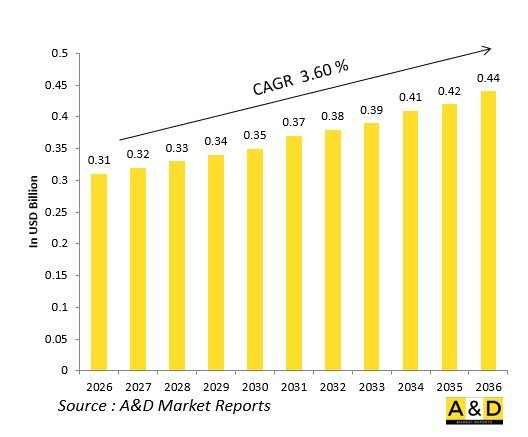
全球國防陀螺羅盤市場預計將從2026年的3.1億美元成長到2036年的4.4億美元,預測期間內複合年增長率(CAGR)為3.60%。
簡介:
全球國防陀螺羅盤市場為船舶、潛水艇和飛機提供不受磁幹擾和GPS幹擾的獨立航向參考。 這些機電或光纖系統透過陀螺儀進動校準至真北,為火控系統、雷達和自動駕駛系統提供穩定的方位角資訊。電子戰的擴展推動了對堅固耐用的陀螺儀的需求,以確保即使在幹擾環境下也能精確捕獲目標並保持位置。海軍水面艦隊引領著這一趨勢,其次是需要更安靜導航的潛艦。創新正在將陀螺儀和慣性系統融合,以實現混合導航。堅固耐用的設計能夠承受衝擊、振動和溫度波動。該市場透過為海上和極地地區的多軸作戰提供不間斷的方向基礎,支援力量投射能力。
科技對防禦性陀螺羅盤的影響
技術進步正在重新定義防禦性陀螺羅盤,同時實現精度和小型化。光纖陀螺儀 (FOG) 透過乾涉感測消除了移動部件,並顯著減少了維護。 環形雷射陀螺儀 (RLG) 為長期任務提供無漂移穩定性。 MEMS 設計小型化,適用於無人機 (UAV) 和飛彈。人工智慧漂移補償功能即使在加速過程中也能自動調整。數位輸出可與作戰網路無縫整合。捷聯式架構無需萬向節,從而提高了固態可靠性。量子感測器提高了靈敏度,與星敏感器融合後,可在星空下進行姿態驗證。半球諧振器陀螺儀具有抗干擾能力。這些進步降低了尺寸、重量和功耗 (SWaP),並延長了平均故障間隔時間 (MTBF)。它們支援保形安裝,並增強了導航抗欺騙和抗干擾能力。
國防陀螺羅盤市場的主要驅動因素
國防陀螺羅盤市場的主要驅動因素包括:全球導航衛星系統 (GNSS) 幹擾威脅需要獨立的真北參考,而潛艦隱身則需要非彈道航向參考。 沿岸磁異常決定了陀螺儀的精確度,而平台現代化正在推動羅盤指針被數位陀螺儀取代。互通性要求使得與盟軍資料鏈共享航向成為可能,而北極作業則需要與極地匯聚保持水準。無人艦隊需要低漂移和自主性。網路安全保護陀螺儀免受駭客攻擊。抗振技術能夠適應旋轉平台等振動環境,並且正在推動供應鏈多元化以解決精密光學元件短缺的問題。預算驅動且經濟高效的解決方案正在被採用,主要基於商用現貨(COTS)的混合系統。所有這些都確保了陀螺儀即使在惡劣條件下仍然是可靠的導航核心。
國防陀螺羅盤的區域趨勢
區域戰略環境塑造了部署策略。北美正在為航空母艦配備用於太平洋航行的光纖陀螺儀(FOG),而歐洲則優先為北大西洋護航船隊配備旋轉陀螺羅盤(RLG)。 在亞太地區,微機電系統(MEMS)正被整合到戰略護衛艦艦隊中,用於集群作戰;而印太地區的各國海軍則正在將陀螺儀和慣性導航系統(INS)整合到島嶼作戰中。中東地區正在應對海灣地區的磁場熱點問題,非洲則在巡邏艇上部署加固型陀螺儀。南美洲正在與內河直升機合作,多國聯盟正在製定輸出標準。量子原型設計和人工智慧校準技術正日益受到關注,其在極地航線和爭議水域具有潛在的應用價值。 本報告深入分析了全球國防陀螺羅盤市場,全面剖析了關鍵趨勢、市場影響因素、關鍵技術及其影響、主要地區和國家的市場趨勢以及市場機會。
目錄
國防陀螺羅盤市場:目錄
國防陀螺羅盤市場:報告定義
國防陀螺羅盤市場:細分
依地區
依平台
依精確度
未來十年國防陀螺羅盤市場分析
國防陀螺羅盤市場成長、趨勢變化、技術應用概況及市場吸引力詳情
國防陀螺羅盤市場:技術
預計將影響市場的十大技術及其對整體市場的潛在影響
全球國防陀螺羅盤市場:預測
以上各細分市場均詳細涵蓋了未來十年的市場預測。
國防陀螺羅盤市場趨勢與預測:依地區劃分
本報告涵蓋市場趨勢、驅動因素、限制因素、挑戰以及政治、經濟、社會和技術因素。報告還提供了詳細的區域市場預測和情境分析。區域分析最後對主要公司、供應商格局和公司基準進行了概述。目前市場規模是基於 "一切照舊" 情境估算的。
北美
驅動因素、限制因素與挑戰
PEST 分析
市場預測與情境分析
主要公司
供應商層級狀況
公司標竿分析
歐洲
中東
亞太地區
南美洲
國防陀螺羅盤市場:國家分析
美國
國防項目
最新資訊
專利
當前市場技術成熟度
市場預測與情境分析
加拿大
義大利
法國
德國
荷蘭
比利時
西班牙
瑞典
希臘
澳洲
南非
印度
中國
俄羅斯
韓國
日本
馬來西亞
新加坡
巴西
國防陀螺羅盤市場:機會矩陣
國防陀螺羅盤市場報告專家觀點
概述討論
關於航空和國防市場報告
The Global defense gyro compasses market is estimated at USD 0.31 billion in 2026, projected to grow to USD 0.44 billion by 2036 at a Compound Annual Growth Rate (CAGR) of 3.60% over the forecast period 2026-2036.
Introduction:
The Global defense gyro compasses market supplies self-contained heading references for warships, submarines, and aircraft, immune to magnetic distortions and GPS outages. These electromechanical or fiber-optic systems align to true north via gyroscope precession, feeding stabilized azimuth to fire control, radar, and autopilot. As electronic warfare proliferates, demand grows for resilient gyros ensuring precise targeting and station-keeping in jammed environments. Naval surface fleets lead, followed by submersibles needing silent operation. Innovations merge gyros with inertial units for hybrid navigation. Rugged designs endure shock, vibration, and temperature swings. The market supports power projection, providing the unjammable directional backbone for multi-axis warfare across oceans and poles.
Technology Impact in Defense Gyro Compasses
Technological evolutions redefine defense gyro compasses, blending precision with compactness. Fiber-optic gyros (FOG) eliminate moving parts, slashing maintenance via interferometric sensing. Ring laser gyros (RLG) deliver drift-free stability for long-endurance missions. MEMS variants miniaturize for UAVs and missiles. AI drift compensation self-aligns amid accelerations. Digital outputs interface seamlessly with combat networks. Strapdown architectures ditch gimbals for solid-state reliability. Quantum sensors explore enhanced sensitivity. Fusion with stellar trackers verifies headings under stars. Hemispherical resonator gyros resist sabotage. These advances cut SWaP, extend MTBF, and enable conformal installs, fortifying navigation against spoofing and denial.
Key Drivers in Defense Gyro Compasses
Essential drivers propel the defense gyro compasses market. GNSS jamming threats mandate independent true-north references. Submarine stealth requires non-emitting heading sources. Littoral magnetic anomalies demand gyro accuracy. Platform modernizations swap magnetic needles for digital gyros. Interoperability links headings to allied datalinks. Arctic ops need pole-convergent alignments. Unmanned fleets crave low-drift autonomy. Cybersecurity shields gyro buses from hacks. Anti-vibration tech suits rotary platforms. Supply diversification counters precision optic shortages. Budgets embrace COTS hybrids for affordability. Collectively, these ensure gyros as the trusted core of degraded navigation.
Regional Trends in Defense Gyro Compasses
Regional demands tailor defense gyro compasses strategies. North America upgrades carriers with FOG for Pacific transits. Europe prioritizes RLG for North Atlantic convoys. Asia-Pacific integrates MEMS for corvette swarms in chokepoints. Indo-Pacific navies fuse gyros with INS for island ops. Middle East adapts for Gulf magnetic hotspots. Africa deploys rugged units on patrol craft. South America links to riverine helos. Collaborative standards unify outputs in coalitions. Trends spotlight quantum prototypes and AI calibration, echoing polar routes and contested seas.
Key Defense Gyro Compasses Programs
Prominent programs highlight defense gyro compasses applications. Destroyer refits embed strapdown FOG in stabilized platforms. Submarines test silent RLG for periscope masts. Frigates validate gyro-stellar hybrids in EW drills. Allied navies standardize digital interfaces for task forces. Drone carriers outfit UAVs with MEMS clusters. Milestones include shock-basin survivability and polar alignments. Amphibious ships sync gyros to landing radars. Developmental quantum gyros pioneer next-gen drift. These efforts deliver resilient, networked heading solutions, anchoring fleets in chaos.
Table of Contents
Defense Gyro Compasses Market - Table of Contents
Defense Gyro Compasses Market Report Definition
Defense Gyro Compasses Market Segmentation
By Region
By Platform
By Type
By Accuracy
Defense Gyro Compasses Market Analysis for next 10 Years
The 10-year Defense Gyro Compasses Market analysis would give a detailed overview of Defense Gyro Compasses Market growth, changing dynamics, technology adoption overviews and the overall market attractiveness is covered in this chapter.
Market Technologies of Defense Gyro Compasses Market
This segment covers the top 10 technologies that is expected to impact this market and the possible implications these technologies would have on the overall market.
Global Defense Gyro Compasses Market Forecast
The 10-year Defense Gyro Compasses Market forecast of this market is covered in detailed across the segments which are mentioned above.
Regional Defense Gyro Compasses Market Trends & Forecast
The regional counter drone market trends, drivers, restraints and Challenges of this market, the Political, Economic, Social and Technology aspects are covered in this segment. The market forecast and scenario analysis across regions are also covered in detailed in this segment. The last part of the regional analysis includes profiling of the key companies, supplier landscape and company benchmarking. The current market size is estimated based on the normal scenario.
North America
Drivers, Restraints and Challenges
PEST
Market Forecast & Scenario Analysis
Key Companies
Supplier Tier Landscape
Company Benchmarking
Europe
Middle East
APAC
South America
Country Analysis of Defense Gyro Compasses Market
This chapter deals with the key defense programs in this market, it also covers the latest news and patents which have been filed in this market. Country level 10 year market forecast and scenario analysis are also covered in this chapter.
US
Defense Programs
Latest News
Patents
Current levels of technology maturation in this market
Market Forecast & Scenario Analysis
Canada
Italy
France
Germany
Netherlands
Belgium
Spain
Sweden
Greece
Australia
South Africa
India
China
Russia
South Korea
Japan
Malaysia
Singapore
Brazil
Opportunity Matrix for Defense Gyro Compasses Market
The opportunity matrix helps the readers understand the high opportunity segments in this market.
Expert Opinions on Defense Gyro Compasses Market Report
Hear from our experts their opinion of the possible analysis for this market.
Conclusions
About Aviation and Defense Market Reports
List of Tables
- Table 1: 10 Year Market Outlook, 2026-2036
- Table 2: Drivers, Impact Analysis, North America
- Table 3: Restraints, Impact Analysis, North America
- Table 4: Challenges, Impact Analysis, North America
- Table 5: Drivers, Impact Analysis, Europe
- Table 6: Restraints, Impact Analysis, Europe
- Table 7: Challenges, Impact Analysis, Europe
- Table 8: Drivers, Impact Analysis, Middle East
- Table 9: Restraints, Impact Analysis, Middle East
- Table 10: Challenges, Impact Analysis, Middle East
- Table 11: Drivers, Impact Analysis, APAC
- Table 12: Restraints, Impact Analysis, APAC
- Table 13: Challenges, Impact Analysis, APAC
- Table 14: Drivers, Impact Analysis, South America
- Table 15: Restraints, Impact Analysis, South America
- Table 16: Challenges, Impact Analysis, South America
- Table 17: Scenario Analysis, Scenario 1, By Type, 2026-2036
- Table 18: Scenario Analysis, Scenario 1, By Platform, 2026-2036
- Table 19: Scenario Analysis, Scenario 1, By Region, 2026-2036
- Table 20: Scenario Analysis, Scenario 2, By Type, 2026-2036
- Table 21: Scenario Analysis, Scenario 2, By Platform, 2026-2036
- Table 22: Scenario Analysis, Scenario 2, By Region, 2026-2036
List of Figures
- Figure 1: Global Defense Gyro Compasses Market Forecast, 2026-2036
- Figure 2: Global Defense Gyro Compasses Market Forecast, By Type, 2026-2036
- Figure 3: Global Defense Gyro Compasses Market Forecast, By Platform, 2026-2036
- Figure 4: Global Defense Gyro Compasses Market Forecast, By Region, 2026-2036
- Figure 5: North America, Defense Gyro Compasses Market, Forecast, 2026-2036
- Figure 6: Europe, Defense Gyro Compasses Market, Forecast, 2026-2036
- Figure 7: Middle East, Defense Gyro Compasses Market, Forecast, 2026-2036
- Figure 8: APAC, Defense Gyro Compasses Market, Forecast, 2026-2036
- Figure 9: South America, Defense Gyro Compasses Market, Forecast, 2026-2036
- Figure 10: United States, Defense Gyro Compasses Market, Technology Maturation, 2026-2036
- Figure 11: United States, Defense Gyro Compasses Market, Forecast, 2026-2036
- Figure 12: Canada, Defense Gyro Compasses Market, Technology Maturation, 2026-2036
- Figure 13: Canada, Defense Gyro Compasses Market, Forecast, 2026-2036
- Figure 14: Italy, Defense Gyro Compasses Market, Technology Maturation, 2026-2036
- Figure 15: Italy, Defense Gyro Compasses Market, Market Forecast, 2026-2036
- Figure 16: France, Defense Gyro Compasses Market, Technology Maturation, 2026-2036
- Figure 17: France, Defense Gyro Compasses Market, Market Forecast, 2026-2036
- Figure 18: Germany, Defense Gyro Compasses Market, Technology Maturation, 2026-2036
- Figure 19: Germany, Defense Gyro Compasses Market, Market Forecast, 2026-2036
- Figure 20: Netherlands, Defense Gyro Compasses Market, Technology Maturation, 2026-2036
- Figure 21: Netherlands, Defense Gyro Compasses Market, Market Forecast, 2026-2036
- Figure 22: Belgium, Defense Gyro Compasses Market, Technology Maturation, 2026-2036
- Figure 23: Belgium, Defense Gyro Compasses Market, Market Forecast, 2026-2036
- Figure 24: Spain, Defense Gyro Compasses Market, Technology Maturation, 2026-2036
- Figure 25: Spain, Defense Gyro Compasses Market, Market Forecast, 2026-2036
- Figure 26: Sweden, Defense Gyro Compasses Market, Technology Maturation, 2026-2036
- Figure 27: Sweden, Defense Gyro Compasses Market, Forecast, 2026-2036
- Figure 28: Brazil, Defense Gyro Compasses Market, Technology Maturation, 2026-2036
- Figure 29: Brazil, Defense Gyro Compasses Market, Market Forecast, 2026-2036
- Figure 30: Australia, Defense Gyro Compasses Market, Technology Maturation, 2026-2036
- Figure 31: Australia, Defense Gyro Compasses Market, Market Forecast, 2026-2036
- Figure 32: India, Defense Gyro Compasses Market, Technology Maturation, 2026-2036
- Figure 33: India, Defense Gyro Compasses Market, Market Forecast, 2026-2036
- Figure 34: China, Defense Gyro Compasses Market, Technology Maturation, 2026-2036
- Figure 35: China, Defense Gyro Compasses Market, Market Forecast, 2026-2036
- Figure 36: Saudi Arabia, Defense Gyro Compasses Market, Technology Maturation, 2026-2036
- Figure 37: Saudi Arabia, Defense Gyro Compasses Market, Market Forecast, 2026-2036
- Figure 38: South Korea, Defense Gyro Compasses Market, Technology Maturation, 2026-2036
- Figure 39: South Korea, Defense Gyro Compasses Market, Market Forecast, 2026-2036
- Figure 40: Japan, Defense Gyro Compasses Market, Technology Maturation, 2026-2036
- Figure 41: Japan, Defense Gyro Compasses Market, Market Forecast, 2026-2036
- Figure 42: Malaysia, Defense Gyro Compasses Market, Technology Maturation, 2026-2036
- Figure 43: Malaysia, Defense Gyro Compasses Market, Market Forecast, 2026-2036
- Figure 44: Singapore, Defense Gyro Compasses Market, Technology Maturation, 2026-2036
- Figure 45: Singapore, Defense Gyro Compasses Market, Market Forecast, 2026-2036
- Figure 46: United Kingdom, Defense Gyro Compasses Market, Technology Maturation, 2026-2036
- Figure 47: United Kingdom, Defense Gyro Compasses Market, Market Forecast, 2026-2036
- Figure 48: Opportunity Analysis, Defense Gyro Compasses Market, By Type(Cumulative Market), 2026-2036
- Figure 49: Opportunity Analysis, Defense Gyro Compasses Market, By Type(CAGR), 2026-2036
- Figure 50: Opportunity Analysis, Defense Gyro Compasses Market, By (Cumulative Market), 2026-2036
- Figure 51: Opportunity Analysis, Defense Gyro Compasses Market, By Platform(CAGR), 2026-2036
- Figure 52: Opportunity Analysis, Defense Gyro Compasses Market, By Region (Cumulative Market), 2026-2036
- Figure 53: Opportunity Analysis, Defense Gyro Compasses Market, By Region (CAGR), 2026-2036
- Figure 54: Scenario Analysis, Defense Gyro Compasses Market, Cumulative Market, 2026-2036
- Figure 55: Scenario Analysis, Defense Gyro Compasses Market, Global Market, 2026-2036
- Figure 56: Scenario 1, Defense Gyro Compasses Market, Total Market, 2026-2036
- Figure 57: Scenario 1, Defense Gyro Compasses Market, By Type, 2026-2036
- Figure 58: Scenario 1, Defense Gyro Compasses Market, By Platform, 2026-2036
- Figure 59: Scenario 1, Defense Gyro Compasses Market, By Region, 2026-2036
- Figure 60: Scenario 2, Defense Gyro Compasses Market, Total Market, 2026-2036
- Figure 61: Scenario 2, Defense Gyro Compasses Market, By Type, 2026-2036
- Figure 62: Scenario 2, Defense Gyro Compasses Market, By Platform, 2026-2036
- Figure 63: Scenario 2, Defense Gyro Compasses Market, By Region, 2026-2036
- Figure 64: Company Benchmark, Defense Gyro Compasses Market, 2026-2036

 陀螺儀市場:全球市場預測,2026-2032年
 全球防衛陀螺儀市場
 2026年全球環形雷射陀螺儀市場報告2026年全球陀螺儀市場報告雙軸陀螺穩定平台市場(按平台類型、技術、安裝類型、應用和最終用戶分類),全球預測,2026-2032年藍寶石球面和半球面透鏡市場:按透鏡類型、材料、應用、最終用戶和銷售管道,全球預測,2026-2032年
 全球環形雷射陀螺儀市場規模、佔有率、趨勢和成長分析報告(2026-2034)
 陀螺儀市場規模、佔有率和成長分析(按技術類型、產品類型、最終用戶和地區分類)-2026-2033年產業預測環形雷射陀螺儀 (RLG) 市場規模、佔有率、成長及全球產業分析:依類型、應用和地區劃分的洞察與預測 (2024-2032)陀螺儀市場規模、佔有率、成長及全球產業分析:依類型、應用和地區劃分的洞察,以及2024-2032年預測