


 |
市場調查報告書
商品編碼
1951136
全球防務作戰管理系統 (CMS) 市場 (2026-2036)Global Defense Combat Management Systems (CMS) Market 2026-2036 |
||||||

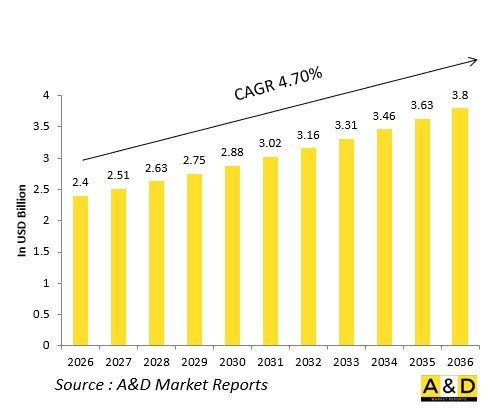
據估計,全球防務作戰管理系統 (CMS) 市場在 2026 年的價值為 24 億美元,預計到 2036 年將達到 38 億美元,2026 年至 2036 年的複合年增長率 (CAGR) 為 4.70%。
引言
全球國防作戰管理系統 (CMS) 市場整合了感測器、武器和決策迴路,為船隻、飛機和地面部隊建構作戰網路。 這些核心的C4ISR系統融合雷達追蹤資料、聲吶訊號和飛彈導引訊息,形成共享的戰術態勢圖,從而能夠快速應對威脅。雖然主要用於海軍應用,例如為驅逐艦和航空母艦上的宙斯盾系統等防禦系統提供支持,但自適應系統也適用於戰鬥機和裝甲旅。其模組化架構實現了與感測器無關的連接,這對聯合作戰至關重要。隨著勢均力敵的對手部署高超音速武器和集群戰術,市場需求激增。網路安全增強了資料匯流排。市場推動了全局聯合優勢的實現,將平台轉變為多軸威脅環境中的智慧節點。
科技對國防作戰管理系統(CMS)的影響
技術創新正在重新定義CMS,並顯著提高殺傷鏈的速度。人工智慧驅動的追蹤融合可以關聯來自多個感測器的輸入,而無需人為幹預。混合雲-邊緣系統可以在毫秒內處理PB級資料。數位孿生技術模擬交戰,以訓練應對潛在場景。 量子加密技術保護敏感通訊。開放式架構整合快速作戰效應器。預測導引對於高超音速攔截系統至關重要。擴增實境(AR)介面將攻擊資料疊加到即時作戰畫面上。區塊鏈用於存檔和歸因。神經網路可自動執行例行兵力選擇。這些進步融合了自主性,擴展到群聚防禦,並在海、空、陸三棲領域建構了強大的指揮控制基礎設施。
國防作戰管理系統(CMS)的關鍵驅動因素
推動國防作戰管理系統市場發展的因素眾多。高超音速威脅需要壓縮OODA循環。感測器擴散使傳統追蹤系統不堪重負。聯合作戰需要無縫的資料鏈路網路。人員限制推動了人工智慧決策支援的發展。電子戰飽和需要認知無線電。平台生命週期推動了螺旋式升級。互通性標準整合了北約武器系統。網路入侵的目標是指揮控制節點。無人系統整合提供了有機情報。預算追求軟體定義的靈活性。所有這些都使作戰管理系統成為戰爭的神經系統。
國防作戰管理系統 (CMS) 的區域趨勢
區域策略推動 CMS 的發展。北美地區正在改進其宙斯盾平台,以適應太平洋戰區的集中打擊。歐洲正在合作開發用於護衛艦網路的模組化核心。亞太地區正在擴展 CMS,以應對航母擊沉飛彈。印太地區正在整合聯合防空指揮控制系統 (JADC2),以應對群島戰區。中東地區正在加強防禦以應對無人機集群。非洲正在適應非對稱巡邏。南美洲正在合作開發邊境雷達。盟國正在標準化應用程式介面 (API),並將美國的人工智慧與歐洲的模組化系統結合。高超音速導引和人工智慧可解釋性是反映飽和攻擊和同儕競爭的趨勢。
本報告分析了全球國防作戰管理系統 (CMS) 市場,提供了影響該市場的技術資訊、未來十年的預測以及區域趨勢。
目錄
國防作戰管理系統 (CMS) 市場報告定義
國防作戰管理系統 (CMS) 市場區隔
依地區
依平台
依架構
依功能
未來十年國防作戰管理系統 (CMS) 市場分析
國防作戰管理系統 (CMS) 市場技術
全球國防作戰管理系統 (CMS) 市場預測
區域國防作戰管理系統 (CMS) 市場趨勢及預測
北美
驅動因素、限制因素與挑戰
PEST 分析
市場預測及情境分析
主要公司
供應商層級概覽
公司標竿分析
歐洲
中東
亞太地區
南美洲
國防作戰管理系統 (CMS) 市場國家分析
美國
國防項目
最新資訊
專利
當前市場技術成熟度
市場預測與情境分析
加拿大
義大利
法國
德國
荷蘭
比利時
西班牙
瑞典
吉里查
澳洲
南非
印度
中國
俄羅斯
韓國
日本
馬來西亞
新加坡
巴西
國防作戰管理系統 (CMS) 市場機會矩陣
國防作戰管理系統 (CMS) 市場專家意見報告
結論
關於航空與國防市場報告
The Global defense combat management systems (CMS) market is estimated at USD 2.4 billion in 2026, projected to grow to USD 3.8 billion by 2036 at a Compound Annual Growth Rate (CAGR) of 4.70% over the forecast period 2026-2036.
Introduction:
The Global defense combat management systems (CMS) market orchestrates sensors, weapons, and decision loops into cohesive battle networks for ships, aircraft, and ground units. These C4ISR cores fuse radar tracks, sonar pings, and missile cues into shared tactical pictures, enabling rapid threat engagement. Naval applications dominate, powering Aegis-like shields on destroyers and carriers, while adaptations serve fighters and armored brigades. Modular architectures allow sensor-agnostic plugs, vital for coalition ops. Demand swells with peer adversaries fielding hypersonics and swarms. Cybersecurity fortifies data buses. The market propels joint all-domain dominance, turning platforms into intelligent nodes amid multi-axis threats.
Technology Impact in Defense Combat Management Systems (CMS)
Technological leaps redefine CMS, amplifying kill-chain speeds. AI track fusion correlates multi-sensor inputs sans human bias. Cloud-edge hybrids process petabyte fires in milliseconds. Digital twins simulate engagements for what-if drills. Quantum encryption secures classified links. Open architectures embrace plug-and-fight effectors. Hypersonic interceptors demand predictive cueing. AR interfaces overlay fires on live feeds. Blockchain logs engagements for attribution. Neural networks automate routine triage. These strides embed autonomy, scale to swarm defenses, and forge resilient C2 fabrics across seas, skies, and soils.
Key Drivers in Defense Combat Management Systems (CMS)
Critical drivers fuel the defense CMS market. Hypersonic threats necessitate compressed OODA loops. Sensor proliferation overwhelms legacy trackers. Joint ops require seamless datalink meshes. Crew limits spur AI decision aids. EW saturation demands cognitive radios. Platform lifecycles trigger spiral upgrades. Interoperability standards unify NATO arsenals. Cyber intrusions target C2 nodes. Unmanned integration feeds organic intel. Budgets chase software-defined flexibility. Collectively, these position CMS as warfighting nervous systems.
Regional Trends in Defense Combat Management Systems (CMS)
Regional strategies tailor CMS evolutions. North America evolves Aegis baselines for Pacific salvos. Europe collaborates on modular cores for frigate nets. Asia-Pacific scales CMS for carrier-killer missiles. Indo-Pacific fuses with JADC2 for archipelago fights. Middle East hardens against drone swarms. Africa adapts for asymmetric patrols. South America links to border radars. Alliances standardize APIs, merging U.S. AI with European modularity. Trends spotlight hypersonic cueing and AI explainability, mirroring saturation attacks and peer rivalries.
Key Defense Combat Management Systems (CMS) Programs
Signature CMS programs showcase integration mastery. Destroyer baselines test swarm-defense algorithms. Carrier CMS ingests UAV feeds for air wing sync. Submarine variants cue tube-launched drones. Allied exercises prove datalink handoffs. Ground CMS tiles brigade battlespaces. Live-fire demos validate kinetic intercepts. Fighter upgrades embed CMS snippets. Developmental quantum CMS pioneer unhackable nets. These initiatives deliver scalable, AI-infused brains, orchestrating victory in chaos.
Table of Contents
Defense Combat Management Systems (CMS) Market - Table of Contents
Defense Combat Management Systems (CMS) Market Report Definition
Defense Combat Management Systems (CMS) Market Segmentation
By Region
By Platform
By Architecture
By Function
Defense Combat Management Systems (CMS) Market Analysis for next 10 Years
The 10-year Defense Combat Management Systems (CMS) Market analysis would give a detailed overview of Defense Combat Management Systems (CMS) Market growth, changing dynamics, technology adoption overviews and the overall market attractiveness is covered in this chapter.
Market Technologies of Defense Combat Management Systems (CMS) Market
This segment covers the top 10 technologies that is expected to impact this market and the possible implications these technologies would have on the overall market.
Global Defense Combat Management Systems (CMS) Market Forecast
The 10-year Defense Combat Management Systems (CMS) Market forecast of this market is covered in detailed across the segments which are mentioned above.
Regional Defense Combat Management Systems (CMS) Market Trends & Forecast
The regional counter drone market trends, drivers, restraints and Challenges of this market, the Political, Economic, Social and Technology aspects are covered in this segment. The market forecast and scenario analysis across regions are also covered in detailed in this segment. The last part of the regional analysis includes profiling of the key companies, supplier landscape and company benchmarking. The current market size is estimated based on the normal scenario.
North America
Drivers, Restraints and Challenges
PEST
Market Forecast & Scenario Analysis
Key Companies
Supplier Tier Landscape
Company Benchmarking
Europe
Middle East
APAC
South America
Country Analysis of Defense Combat Management Systems (CMS) Market
This chapter deals with the key defense programs in this market, it also covers the latest news and patents which have been filed in this market. Country level 10 year market forecast and scenario analysis are also covered in this chapter.
US
Defense Programs
Latest News
Patents
Current levels of technology maturation in this market
Market Forecast & Scenario Analysis
Canada
Italy
France
Germany
Netherlands
Belgium
Spain
Sweden
Greece
Australia
South Africa
India
China
Russia
South Korea
Japan
Malaysia
Singapore
Brazil
Opportunity Matrix for Defense Combat Management Systems (CMS) Market
The opportunity matrix helps the readers understand the high opportunity segments in this market.
Expert Opinions on Defense Combat Management Systems (CMS) Market Report
Hear from our experts their opinion of the possible analysis for this market.
Conclusions
About Aviation and Defense Market Reports
List of Tables
- Table 1: 10 Year Market Outlook, 2026-2036
- Table 2: Drivers, Impact Analysis, North America
- Table 3: Restraints, Impact Analysis, North America
- Table 4: Challenges, Impact Analysis, North America
- Table 5: Drivers, Impact Analysis, Europe
- Table 6: Restraints, Impact Analysis, Europe
- Table 7: Challenges, Impact Analysis, Europe
- Table 8: Drivers, Impact Analysis, Middle East
- Table 9: Restraints, Impact Analysis, Middle East
- Table 10: Challenges, Impact Analysis, Middle East
- Table 11: Drivers, Impact Analysis, APAC
- Table 12: Restraints, Impact Analysis, APAC
- Table 13: Challenges, Impact Analysis, APAC
- Table 14: Drivers, Impact Analysis, South America
- Table 15: Restraints, Impact Analysis, South America
- Table 16: Challenges, Impact Analysis, South America
- Table 17: Scenario Analysis, Scenario 1, By Architecture, 2026-2036
- Table 18: Scenario Analysis, Scenario 1, By Platform, 2026-2036
- Table 19: Scenario Analysis, Scenario 1, By Region, 2026-2036
- Table 20: Scenario Analysis, Scenario 2, By Architecture, 2026-2036
- Table 21: Scenario Analysis, Scenario 2, By Platform, 2026-2036
- Table 22: Scenario Analysis, Scenario 2, By Region, 2026-2036
List of Figures
- Figure 1: Global Defense Combat Management Systems (CMS) Market Forecast, 2026-2036
- Figure 2: Global Defense Combat Management Systems (CMS) Market Forecast, By Architecture, 2026-2036
- Figure 3: Global Defense Combat Management Systems (CMS) Market Forecast, By Platform, 2026-2036
- Figure 4: Global Defense Combat Management Systems (CMS) Market Forecast, By Region, 2026-2036
- Figure 5: North America, Defense Combat Management Systems (CMS) Market, Forecast, 2026-2036
- Figure 6: Europe, Defense Combat Management Systems (CMS) Market, Forecast, 2026-2036
- Figure 7: Middle East, Defense Combat Management Systems (CMS) Market, Forecast, 2026-2036
- Figure 8: APAC, Defense Combat Management Systems (CMS) Market, Forecast, 2026-2036
- Figure 9: South America, Defense Combat Management Systems (CMS) Market, Forecast, 2026-2036
- Figure 10: United States, Defense Combat Management Systems (CMS) Market, Technology Maturation, 2026-2036
- Figure 11: United States, Defense Combat Management Systems (CMS) Market, Forecast, 2026-2036
- Figure 12: Canada, Defense Combat Management Systems (CMS) Market, Technology Maturation, 2026-2036
- Figure 13: Canada, Defense Combat Management Systems (CMS) Market, Forecast, 2026-2036
- Figure 14: Italy, Defense Combat Management Systems (CMS) Market, Technology Maturation, 2026-2036
- Figure 15: Italy, Defense Combat Management Systems (CMS) Market, Market Forecast, 2026-2036
- Figure 16: France, Defense Combat Management Systems (CMS) Market, Technology Maturation, 2026-2036
- Figure 17: France, Defense Combat Management Systems (CMS) Market, Market Forecast, 2026-2036
- Figure 18: Germany, Defense Combat Management Systems (CMS) Market, Technology Maturation, 2026-2036
- Figure 19: Germany, Defense Combat Management Systems (CMS) Market, Market Forecast, 2026-2036
- Figure 20: Netherlands, Defense Combat Management Systems (CMS) Market, Technology Maturation, 2026-2036
- Figure 21: Netherlands, Defense Combat Management Systems (CMS) Market, Market Forecast, 2026-2036
- Figure 22: Belgium, Defense Combat Management Systems (CMS) Market, Technology Maturation, 2026-2036
- Figure 23: Belgium, Defense Combat Management Systems (CMS) Market, Market Forecast, 2026-2036
- Figure 24: Spain, Defense Combat Management Systems (CMS) Market, Technology Maturation, 2026-2036
- Figure 25: Spain, Defense Combat Management Systems (CMS) Market, Market Forecast, 2026-2036
- Figure 26: Sweden, Defense Combat Management Systems (CMS) Market, Technology Maturation, 2026-2036
- Figure 27: Sweden, Defense Combat Management Systems (CMS) Market, Forecast, 2026-2036
- Figure 28: Brazil, Defense Combat Management Systems (CMS) Market, Technology Maturation, 2026-2036
- Figure 29: Brazil, Defense Combat Management Systems (CMS) Market, Market Forecast, 2026-2036
- Figure 30: Australia, Defense Combat Management Systems (CMS) Market, Technology Maturation, 2026-2036
- Figure 31: Australia, Defense Combat Management Systems (CMS) Market, Market Forecast, 2026-2036
- Figure 32: India, Defense Combat Management Systems (CMS) Market, Technology Maturation, 2026-2036
- Figure 33: India, Defense Combat Management Systems (CMS) Market, Market Forecast, 2026-2036
- Figure 34: China, Defense Combat Management Systems (CMS) Market, Technology Maturation, 2026-2036
- Figure 35: China, Defense Combat Management Systems (CMS) Market, Market Forecast, 2026-2036
- Figure 36: Saudi Arabia, Defense Combat Management Systems (CMS) Market, Technology Maturation, 2026-2036
- Figure 37: Saudi Arabia, Defense Combat Management Systems (CMS) Market, Market Forecast, 2026-2036
- Figure 38: South Korea, Defense Combat Management Systems (CMS) Market, Technology Maturation, 2026-2036
- Figure 39: South Korea, Defense Combat Management Systems (CMS) Market, Market Forecast, 2026-2036
- Figure 40: Japan, Defense Combat Management Systems (CMS) Market, Technology Maturation, 2026-2036
- Figure 41: Japan, Defense Combat Management Systems (CMS) Market, Market Forecast, 2026-2036
- Figure 42: Malaysia, Defense Combat Management Systems (CMS) Market, Technology Maturation, 2026-2036
- Figure 43: Malaysia, Defense Combat Management Systems (CMS) Market, Market Forecast, 2026-2036
- Figure 44: Singapore, Defense Combat Management Systems (CMS) Market, Technology Maturation, 2026-2036
- Figure 45: Singapore, Defense Combat Management Systems (CMS) Market, Market Forecast, 2026-2036
- Figure 46: United Kingdom, Defense Combat Management Systems (CMS) Market, Technology Maturation, 2026-2036
- Figure 47: United Kingdom, Defense Combat Management Systems (CMS) Market, Market Forecast, 2026-2036
- Figure 48: Opportunity Analysis, Defense Combat Management Systems (CMS) Market, By Architecture (Cumulative Market), 2026-2036
- Figure 49: Opportunity Analysis, Defense Combat Management Systems (CMS) Market, By Architecture (CAGR), 2026-2036
- Figure 50: Opportunity Analysis, Defense Combat Management Systems (CMS) Market, By (Cumulative Market), 2026-2036
- Figure 51: Opportunity Analysis, Defense Combat Management Systems (CMS) Market, By Platform(CAGR), 2026-2036
- Figure 52: Opportunity Analysis, Defense Combat Management Systems (CMS) Market, By Region (Cumulative Market), 2026-2036
- Figure 53: Opportunity Analysis, Defense Combat Management Systems (CMS) Market, By Region (CAGR), 2026-2036
- Figure 54: Scenario Analysis, Defense Combat Management Systems (CMS) Market, Cumulative Market, 2026-2036
- Figure 55: Scenario Analysis, Defense Combat Management Systems (CMS) Market, Global Market, 2026-2036
- Figure 56: Scenario 1, Defense Combat Management Systems (CMS) Market, Total Market, 2026-2036
- Figure 57: Scenario 1, Defense Combat Management Systems (CMS) Market, By Architecture, 2026-2036
- Figure 58: Scenario 1, Defense Combat Management Systems (CMS) Market, By Platform, 2026-2036
- Figure 59: Scenario 1, Defense Combat Management Systems (CMS) Market, By Region, 2026-2036
- Figure 60: Scenario 2, Defense Combat Management Systems (CMS) Market, Total Market, 2026-2036
- Figure 61: Scenario 2, Defense Combat Management Systems (CMS) Market, By Architecture, 2026-2036
- Figure 62: Scenario 2, Defense Combat Management Systems (CMS) Market, By Platform, 2026-2036
- Figure 63: Scenario 2, Defense Combat Management Systems (CMS) Market, By Region, 2026-2036
- Figure 64: Company Benchmark, Defense Combat Management Systems (CMS) Market, 2026-2036

 作戰管理系統市場-2026-2032年全球市場預測
 作戰管理系統市場:依組件、架構、子系統、平台、最終用戶和地區分類
 全球作戰管理系統市場:2026-2036年
 2026年全球作戰管理系統市場報告2026年全球海軍作戰管理系統市場報告
 作戰管理系統市場-全球產業規模、佔有率、趨勢、機會及預測(依組件、子系統、平台、地區及競爭格局分類,2021-2031年)
 作戰管理系統市場規模、佔有率和成長分析(按平台類型、組件、部署類型、最終用戶和地區分類)-2026-2033年產業預測
 作戰管理系統市場機會、成長動力、產業趨勢分析與預測 2024 - 2032