


 |
市場調查報告書
商品編碼
1936042
全球AESA雷達市場:2026-2036Global AESA Radar Market 2026-2036 |
||||||

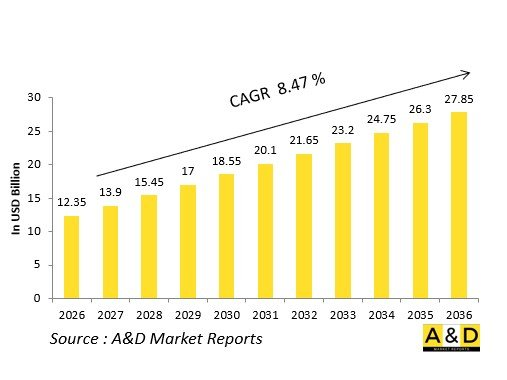
2026年全球AESA雷達市場規模估計為123.5億美元,預計到2036年將達到278.5億美元,2026年至2036年的年複合成長率(CAGR)為8.47%。
引言
全球AESA雷達市場是現代空中優勢的基礎,它利用固態相控陣雷達為戰鬥機火控、海軍監視和陸基飛彈防禦提供支援。數千個收發模組(TRM)可實現快速波束穩定、同步空對空追蹤和地面測繪,其可靠性和多功能性超越了機械雷達。
市場發展反映了機隊現代化進程,現有平台透過 AESA 升級擴展,而新設計則採用氮化鎵(GaN)實現緊湊型電源。關鍵特性包括頻率捷變、低旁瓣和電子對抗,支持用於視場作戰和合成孔徑成像的交錯模式。
地緣政治緊張局勢推動採購,各國空軍都在尋求適用於多用途戰鬥機和無人機的可擴展架構。互通性標準促進了出口,而開放式系統設計則便於升級。在半導體短缺的情況下,供應鏈致力於高可靠性半導體。基於 GaN 的模組領域,現有企業正與新興企業競爭。
該市場體現了感測器融合在網路化戰爭中的作用。
AESA雷達的技術影響
AESA技術透過電子波束控制革新了雷達性能,無需機械萬向節即可實現瞬時方位角和仰角變化。基於GaN的TRM提高了功率和效率,可以縮小陣列尺寸,同時擴展對隱身目標和高超音速飛行器的偵測範圍。
多功能性使其能夠在噪音環境下同時追蹤數十個目標,並同時進行追蹤和掃描以進行飛彈導引。自適應波形支援跳頻,避免干擾並超越敵方反應時間。低捕獲機率模式使用擴頻訊號來掩蔽被動偵測器的無線電輻射。
數位波束成形技術可產生用於精確探測的窄波束或用於搜尋的寬扇形波束,最佳化地面模式下的合成孔徑解析度。非合作目標識別透過分析微多普勒特徵來區分敵我。與電子戰系統的整合可利用定向噪音抑制威脅。
感知演算法能夠自我最佳化以應對噪音和欺騙,而數位孿生技術則加速了模式的發展。艦載版本足夠堅固,能夠承受艦船運動,並支援廣域搜索和視野擴展。這些進步縮短了殺傷鏈,並在對抗空域中實現了 "先發制人" 的優勢。
AESA雷達的主要驅動因素
戰鬥機機隊的現代化推動AESA雷達的採用,因為老舊飛機需要進行改裝以應對隱身威脅和飽和攻擊。海軍航空兵需要在對抗激烈的深海環境中為多用途航空母艦配備小型機頭雷達。
高超音速和低可偵測性武器的擴散需要超越機械掃描極限的敏捷追蹤能力。出口市場對能夠結合可擴展的追蹤參考模型(TRM)數量以適應不同平台並採用偏移生產的解決方案的需求蓬勃發展。
互通性需求推動聯合作戰通用架構的發展。向氮化鎵(GaN)的過渡顯著降低了尺寸、重量和功耗,能夠實現無人機群和忠誠僚機的協同作戰。日益頻繁的電子戰促使人們選擇抗電子對抗(ECCM)的設計。
預算壓力促使人們傾向於選擇長壽命的固態元件,而不是維護成本高的真空管。城市空戰理論優先考慮多模式彈性。供應鏈本地化有助於解決脆弱性問題。
透過高效能模組實現永續性符合綠色採購原則。這些因素鞏固了 AESA 作為 C4ISR 基礎的地位。
AESA 雷達依地區劃分的發展趨勢
北美在成熟的GaN 專案方面處於領先地位,這些專案用於 F-35 系列戰機和宙斯盾艦的升級,並強調多域融合。
在歐洲,共同開發用於歐洲戰鬥機和陣風戰鬥機的可擴展陣列,以符合北約在東線的標準。
在亞太地區,為應對島嶼和喜馬拉雅地區的威脅,本土研發加速推進,例如印度的Uttam計畫用於Tejas,中國的殲-20系列戰機。
在中東,西方進口產品正與本地組裝相結合,以確保空中優勢。
俄羅斯研發能夠抵抗電子戰飽和的砷化鎵陣列。
韓國和日本優先發展用於海上拒止的小型艦載主動相控陣雷達。
在拉丁美洲,各國正致力於進口陸基系統用於領土監視。
數位主動相控陣雷達和人工智慧處理技術的發展趨勢融合,使亞太地區在大規模生產方面具有優勢。
主要AESA雷達專案
戰鬥機計畫是AESA發展的基礎 - AN/APG-81為隱身平台提供空對空/空對地互通性和抗干擾能力。
陣風RBE2-AA為出口機隊提供小型氮化鎵(GaN)功率。
歐洲戰鬥機Captor-E擴展了目標參考模型(TRM),使其角色更有彈性。
印度自主研發的Uttam陣列為LCA的後繼機型提供多模式機動性支援。
海軍的AN/SPY-6可擴展,適用於驅逐艦廣域搜尋。
陸基AN/TPY-4移動陣列用來引導飛彈防禦。
改良型無人機(UAV),例如MQ-9 "掠奪者" ,將擴展遠程偵察和監視(ISR)能力。
數位化主動相控陣雷達(AESA)路線圖將整合量子處理器以支援認知模式。
將使用共同開發的樣機進行高超音速追蹤測試。
出口組件將與導彈整合,以實現全面殺傷力。
這些努力將重新定義雷達,使其成為一種動態效應裝置。
目錄
AESA雷達市場 - 目錄
AESA雷達市場報告定義
AESA雷達市場區隔
依地區
依應用
依平台
未來十年AESA雷達市場分析
本章透過對未來十年AESA雷達市場的分析,詳細概述了AESA雷達市場的成長、趨勢變化、技術應用概況以及整體市場吸引力。
AESA雷達市場技術
本部分討論了預計將影響該市場的十大技術,以及這些技術可能對整體市場產生的潛在影響。
全球AESA雷達市場預測
以上各細分市場詳細闡述了未來十年AESA雷達市場的預測。
AESA雷達市場區域趨勢及預測
本部分涵蓋各區域AESA雷達市場的趨勢、驅動因素、限制因素、挑戰以及政治、經濟、社會和技術因素。此外,也提供詳細的區域市場預測和情境分析。最終的區域分析包括主要公司概況、供應商格局和公司基準分析。目前市場規模是基通常情況估算的。
北美
驅動因素、限制因素與挑戰
PEST分析
市場預測與情境分析
主要公司
供應商層級結構
公司標竿分析
歐洲
中東
亞太地區
南美洲
(市場名稱)國家分析
本章 涵蓋該市場的主要國防項目以及最新的新聞和專利申請。此外,本章 也提供國家層級的十年市場預測和情境分析。
美國
國防項目
最新消息
專利
當前市場技術成熟度
市場預測與情境分析
加拿大
義大利
法國
德國
荷蘭
比利時
西班牙
瑞典
希臘
澳洲
南非
印度
中國
俄羅斯
韓國
日本
馬來西亞
新加坡
巴西
AESA雷達市場機會矩陣
機會矩陣幫助讀者了解該市場中高機會細分領域。
AESA雷達市場報告專家意見
本報告總結了專家對此市場分析潛力的意見。
結論
關於航空與國防市場報告
The Global AESA Radar Market is estimated at USD 12.35 billion in 2026, projected to grow to USD 27.85 billion by 2036 at a Compound Annual Growth Rate (CAGR) of 8.47% over the forecast period 2026-2036.
Introduction
The global AESA Radar market anchors modern air dominance, powering fighter fire control, naval surveillance, and ground-based missile defense with solid-state phased arrays. Thousands of transmit-receive modules (TRMs) enable rapid beam agility, simultaneous air-to-air tracking, and ground mapping, surpassing mechanical radars in reliability and versatility.
Market evolution reflects fleet modernization, where AESA retrofits extend legacy platforms while new designs incorporate gallium nitride for compact power. Core features include frequency agility, low sidelobes, and electronic counter-countermeasures, supporting interleaved modes for beyond-visual-range engagements and synthetic aperture imaging.
Geopolitical tensions drive procurement, with air forces seeking scalable architectures for multirole fighters and UAVs. Interoperability standards facilitate exports, while open-system designs ease upgrades. Supply chains focus on resilient semiconductors amid chip constraints. Competition pits established primes against emerging players in GaN-based modules.
This market exemplifies sensor fusion's role in networked warfare.
Technology Impact in AESA Radar
AESA technology revolutionizes radar performance through electronic beam steering, eliminating mechanical gimbals for instantaneous azimuth and elevation shifts. GaN-based TRMs boost power output and efficiency, shrinking arrays while extending detection against stealthy targets and hypersonics.
Multi-function capabilities track dozens of contacts simultaneously, cueing missiles via track-while-scan amid clutter. Adaptive waveforms evade jamming, hopping frequencies faster than adversaries react. Low-probability-of-intercept modes use spread-spectrum signals, concealing emissions from passive detectors.
Digital beamforming shapes narrow pencil beams for precision or wide fans for search, optimizing synthetic aperture resolution in ground modes. Non-cooperative target recognition analyzes micro-Doppler signatures for friend-foe decisions. Integration with EW suites suppresses threats via directed noise.
Cognitive algorithms self-optimize against clutter or deception, while digital twins accelerate mode development. Naval variants ruggedize for ship motion, supporting volume search and horizon extension. These strides compress kill chains, enabling first-look-first-kill advantages in contested airspace.
Key Drivers in AESA Radar
Fighter fleet modernization propels AESA adoption, retrofitting legacy airframes to counter stealthy threats and saturation attacks. Naval aviation demands compact nose radars for multirole carriers amid blue-water rivalries.
Proliferating hypersonic and low-observable munitions necessitate agile tracking beyond mechanically scanned limits. Export markets thrive on scalable TRM counts suiting diverse platforms, bundled with offset production.
Interoperability mandates drive common architectures for coalition ops. GaN transitions slash size-weight-power, enabling UAV and loyal wingman swarms. Electronic warfare escalation favors ECCM-hardened designs.
Budget pressures favor long-life solid-state over maintenance-heavy tubes. Urban air combat doctrines prioritize multi-mode flexibility. Supply chain localization counters vulnerabilities.
Sustainability via efficient modules aligns with green procurement. These forces embed AESA as C4ISR cornerstone.
Regional Trends in AESA Radar
North America leads with mature GaN programs for F-35 derivatives and Aegis upgrades, emphasizing multi-domain fusion.
Europe collaborates on scalable arrays for Eurofighter and Rafale, harmonizing via NATO standards for eastern flanks.
Asia-Pacific accelerates indigenous development-India's Uttam for Tejas, China's J-20 suites-tailored to island and Himalayan threats.
Middle East integrates Western imports with local assembly for air superiority.
Russia advances gallium arsenide arrays resilient to EW saturation.
South Korea and Japan prioritize compact naval AESA for sea denial.
Latin America focuses ground-based imports for territorial vigilance.
Trends converge on digital AESA with AI processing, Asia-Pacific gaining via volume production.
Key AESA Radar Programs
Fighter programs anchor AESA evolution: AN/APG-81 equips stealth platforms with interleaved A2A/A2G modes and jamming resistance.
Rafale RBE2-AA delivers compact GaN power for export fleets.
Eurofighter Captor-E scales TRMs for role flexibility.
India's Uttam indigenous array powers LCA successors with multimode agility.
Naval AN/SPY-6 scales for destroyer volume search.
Ground-based AN/TPY-4 mobile arrays cue missile defenses.
UAV variants like MQ-9 Predator upgrades extend endurance ISR.
Digital AESA roadmaps fuse quantum processors for cognitive modes.
Collaborative prototypes test hypersonic tracking.
Export packages bundle with missiles for holistic lethality.
These initiatives redefine radar as dynamic effectors.
Table of Contents
AESA Radar Market - Table of Contents
AESA Radar Market Report Definition
AESA Radar Market Segmentation
By Region
By Fit
By Platform
AESA Radar Market Analysis for next 10 Years
The 10-year AESA radar market analysis would give a detailed overview of AESA radar market growth, changing dynamics, technology adoption overviews and the overall market attractiveness is covered in this chapter.
Market Technologies of AESA Radar Market
This segment covers the top 10 technologies that is expected to impact this market and the possible implications these technologies would have on the overall market.
Global AESA Radar Market Forecast
The 10-year AESA radar market forecast of this market is covered in detailed across the segments which are mentioned above.
Regional AESA Radar Market Trends & Forecast
The regional AESA radar market trends, drivers, restraints and Challenges of this market, the Political, Economic, Social and Technology aspects are covered in this segment. The market forecast and scenario analysis across regions are also covered in detailed in this segment. The last part of the regional analysis includes profiling of the key companies, supplier landscape and company benchmarking. The current market size is estimated based on the normal scenario.
North America
Drivers, Restraints and Challenges
PEST
Market Forecast & Scenario Analysis
Key Companies
Supplier Tier Landscape
Company Benchmarking
Europe
Middle East
APAC
South America
Country Analysis of (Market name)
This chapter deals with the key defense programs in this market, it also covers the latest news and patents which have been filed in this market. Country level 10 year market forecast and scenario analysis are also covered in this chapter.
US
Defense Programs
Latest News
Patents
Current levels of technology maturation in this market
Market Forecast & Scenario Analysis
Canada
Italy
France
Germany
Netherlands
Belgium
Spain
Sweden
Greece
Australia
South Africa
India
China
Russia
South Korea
Japan
Malaysia
Singapore
Brazil
Opportunity Matrix for AESA Radar Market
The opportunity matrix helps the readers understand the high opportunity segments in this market.
Expert Opinions on AESA Radar Market Report
Hear from our experts their opinion of the possible analysis for this market.
Conclusions
About Aviation and Defense Market Reports
List of Tables
- Table 1: 10 Year Market Outlook, 2026-2036
- Table 2: Drivers, Impact Analysis, North America
- Table 3: Restraints, Impact Analysis, North America
- Table 4: Challenges, Impact Analysis, North America
- Table 5: Drivers, Impact Analysis, Europe
- Table 6: Restraints, Impact Analysis, Europe
- Table 7: Challenges, Impact Analysis, Europe
- Table 8: Drivers, Impact Analysis, Middle East
- Table 9: Restraints, Impact Analysis, Middle East
- Table 10: Challenges, Impact Analysis, Middle East
- Table 11: Drivers, Impact Analysis, APAC
- Table 12: Restraints, Impact Analysis, APAC
- Table 13: Challenges, Impact Analysis, APAC
- Table 14: Drivers, Impact Analysis, South America
- Table 15: Restraints, Impact Analysis, South America
- Table 16: Challenges, Impact Analysis, South America
- Table 17: Scenario Analysis, Scenario 1, By Region, 2026-2036
- Table 18: Scenario Analysis, Scenario 1, By Platform, 2026-2036
- Table 19: Scenario Analysis, Scenario 1, By Fit , 2026-2036
- Table 20: Scenario Analysis, Scenario 2, By Region, 2026-2036
- Table 21: Scenario Analysis, Scenario 2, By Platform, 2026-2036
- Table 22: Scenario Analysis, Scenario 2, By Fit , 2026-2036
List of Figures
- Figure 1: Global AESA Radar Market Forecast, 2026-2036
- Figure 2: Global AESA Radar Market Forecast, By Region, 2026-2036
- Figure 3: Global AESA Radar Market Forecast, By Platform, 2026-2036
- Figure 4: Global AESA Radar Market Forecast, By Fit , 2026-2036
- Figure 5: North America, AESA Radar Market, Forecast, 2026-2036
- Figure 6: Europe, AESA Radar Market, Forecast, 2026-2036
- Figure 7: Middle East, AESA Radar Market, Forecast, 2026-2036
- Figure 8: APAC, AESA Radar Market, Forecast, 2026-2036
- Figure 9: South America, AESA Radar Market, Forecast, 2026-2036
- Figure 10: United States, AESA Radar Market, Technology Maturation, 2026-2036
- Figure 11: United States, AESA Radar Market, Forecast, 2026-2036
- Figure 12: Canada, AESA Radar Market, Technology Maturation, 2026-2036
- Figure 13: Canada, AESA Radar Market, Forecast, 2026-2036
- Figure 14: Italy, AESA Radar Market, Technology Maturation, 2026-2036
- Figure 15: Italy, AESA Radar Market, Market Forecast, 2026-2036
- Figure 16: France, AESA Radar Market, Technology Maturation, 2026-2036
- Figure 17: France, AESA Radar Market, Market Forecast, 2026-2036
- Figure 18: Germany, AESA Radar Market, Technology Maturation, 2026-2036
- Figure 19: Germany, AESA Radar Market, Market Forecast, 2026-2036
- Figure 20: Netherlands, AESA Radar Market, Technology Maturation, 2026-2036
- Figure 21: Netherlands, AESA Radar Market, Market Forecast, 2026-2036
- Figure 22: Belgium, AESA Radar Market, Technology Maturation, 2026-2036
- Figure 23: Belgium, AESA Radar Market, Market Forecast, 2026-2036
- Figure 24: Spain, AESA Radar Market, Technology Maturation, 2026-2036
- Figure 25: Spain, AESA Radar Market, Market Forecast, 2026-2036
- Figure 26: Sweden, AESA Radar Market, Technology Maturation, 2026-2036
- Figure 27: Sweden, AESA Radar Market, Market Forecast, 2026-2036
- Figure 28: Brazil, AESA Radar Market, Technology Maturation, 2026-2036
- Figure 29: Brazil, AESA Radar Market, Market Forecast, 2026-2036
- Figure 30: Australia, AESA Radar Market, Technology Maturation, 2026-2036
- Figure 31: Australia, AESA Radar Market, Market Forecast, 2026-2036
- Figure 32: India, AESA Radar Market, Technology Maturation, 2026-2036
- Figure 33: India, AESA Radar Market, Market Forecast, 2026-2036
- Figure 34: China, AESA Radar Market, Technology Maturation, 2026-2036
- Figure 35: China, AESA Radar Market, Market Forecast, 2026-2036
- Figure 36: Saudi Arabia, AESA Radar Market, Technology Maturation, 2026-2036
- Figure 37: Saudi Arabia, AESA Radar Market, Market Forecast, 2026-2036
- Figure 38: South Korea, AESA Radar Market, Technology Maturation, 2026-2036
- Figure 39: South Korea, AESA Radar Market, Market Forecast, 2026-2036
- Figure 40: Japan, AESA Radar Market, Technology Maturation, 2026-2036
- Figure 41: Japan, AESA Radar Market, Market Forecast, 2026-2036
- Figure 42: Malaysia, AESA Radar Market, Technology Maturation, 2026-2036
- Figure 43: Malaysia, AESA Radar Market, Market Forecast, 2026-2036
- Figure 44: Singapore, AESA Radar Market, Technology Maturation, 2026-2036
- Figure 45: Singapore, AESA Radar Market, Market Forecast, 2026-2036
- Figure 46: United Kingdom, AESA Radar Market, Technology Maturation, 2026-2036
- Figure 47: United Kingdom, AESA Radar Market, Market Forecast, 2026-2036
- Figure 48: Opportunity Analysis, AESA Radar Market, By Region (Cumulative Market), 2026-2036
- Figure 49: Opportunity Analysis, AESA Radar Market, By Region (CAGR), 2026-2036
- Figure 50: Opportunity Analysis, AESA Radar Market, By (Cumulative Market), 2026-2036
- Figure 51: Opportunity Analysis, AESA Radar Market, By Platform (CAGR), 2026-2036
- Figure 52: Opportunity Analysis, AESA Radar Market, By Fit (Cumulative Market), 2026-2036
- Figure 53: Opportunity Analysis, AESA Radar Market, By Fit (CAGR), 2026-2036
- Figure 54: Scenario Analysis, AESA Radar Market, Cumulative Market, 2026-2036
- Figure 55: Scenario Analysis, AESA Radar Market, Global Market, 2026-2036
- Figure 56: Scenario 1, AESA Radar Market, Total Market, 2026-2036
- Figure 57: Scenario 1, AESA Radar Market, By Region, 2026-2036
- Figure 58: Scenario 1, AESA Radar Market, By Platform, 2026-2036
- Figure 59: Scenario 1, AESA Radar Market, By Fit , 2026-2036
- Figure 60: Scenario 2, AESA Radar Market, Total Market, 2026-2036
- Figure 61: Scenario 2, AESA Radar Market, By Region, 2026-2036
- Figure 62: Scenario 2, AESA Radar Market, By Platform, 2026-2036
- Figure 63: Scenario 2, AESA Radar Market, By Fit , 2026-2036
- Figure 64: Company Benchmark, AESA Radar Market, 2026-2036

 主動電子掃描陣列雷達市場機會、成長促進因素、產業趨勢分析及2026-2035年預測
 全球軍用雷達市場規模、佔有率、趨勢和成長分析報告(2026-2034年)
 軍用雷達市場-2026-2032年全球市場預測
 軍用雷達系統:市場與技術預測(至2034年)軍用雷達市場機會、成長促進因素、產業趨勢分析及2026-2035年預測。
 地面雷達市場報告:趨勢、預測和競爭分析(至2035年)
 2026年全球軍用攜帶式監視雷達市場報告2026年全球軍用雷達市場報告軍用雷達市場規模、佔有率、成長及全球產業分析:按類型、應用和地區分類的洞察,2026-2034 年預測氮化鎵軍用雷達市場:按頻寬、平台、架構、部署模式和應用分類-2026-2032年全球預測