


 |
市場調查報告書
商品編碼
1930535
全球擴增實境與虛擬實境國防市場(2026-2036)Global AR & VR Defense Market 2026-2036 |
||||||

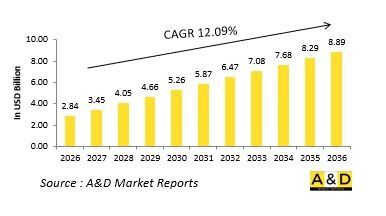
據估計,2026年全球擴增實境與虛擬實境市場規模為28.4億美元,預計到2036年將達到88.9億美元,2026年至2036年的複合年增長率(CAGR)為12.09%。
引言
擴增實境(AR)和虛擬實境(VR)技術正日益改變國防部隊在現代軍事環境中的訓練、計劃和作戰方式。這些沉浸式技術能夠在不使人員面臨現實世界風險的情況下,實現對作戰場景的逼真模擬、行動演練和技能發展。在國防應用中,擴增實境(AR)透過將數位資訊疊加到實體環境中來增強實戰作戰,而虛擬實境(VR)則創造了完全沉浸式的訓練和規劃空間。這些技術的應用反映了軍隊向數位轉型和數據驅動決策的更廣泛轉變。隨著作戰複雜性的增加,國防機構正在尋求能夠提高戰備水準、降低訓練成本並增強認知能力的工具。 AR 和 VR 解決方案正被整合到單兵訓練、指揮官規劃、維護保障和作戰模擬等各個環節。這些技術能夠模擬各種不同的環境和情境,使地理位置分散的部隊能夠保持一致的訓練標準。這些技術日益被認為是實現和平時期和戰爭時期戰備水準和作戰效能的關鍵要素。
AR 與 VR 技術對國防的影響
技術進步正在迅速擴展 AR 和 VR 在國防領域的應用能力和真實感。顯示解析度、運動追蹤和空間映射技術的改進正在創造高度沉浸式和精確的訓練環境。處理能力的提升使得複雜情境和動態互動的即時渲染成為可能。人工智慧透過對使用者操作和表現做出反應,為自適應訓練模組提供動力。基於雲端的架構支援可擴展的部署和跨單位的遠端協作。擴增實境技術透過與感測器數據和作戰系統的整合,在演習和作戰行動中提供即時態勢感知。觸覺回饋技術透過模擬物理互動來增強真實感。輕巧的人體工學硬體設計提升了使用者的舒適度和易用性。這些技術發展使擴增實境/虛擬實境系統能夠支援從戰術訓練到戰略規劃的各種國防功能。
國防領域擴增實境/虛擬實境技術的關鍵驅動因素
多種因素正在推動國防組織採用擴增實境/虛擬實境技術。對經濟高效且可重複的訓練解決方案的需求,促使人們投資於虛擬環境,以減少對實戰演習的依賴。日益複雜的作戰環境需要能夠增強決策能力和認知準備的工具。國防組織的目標是在最大限度地降低安全風險的同時,提高訓練的真實性。科技的快速進步和數位化原生員工隊伍的壯大,正在推動擴增實境/虛擬實境技術的廣泛應用。擴增實境(AR)指導在維修和後勤訓練中卓有成效,能夠提高效率並減少錯誤。互通性和聯合訓練的需求也推動了對標準化沉浸式解決方案的需求。此外,對持續戰備和快速技能發展的重視,也使人們對AR和VR技術保持著長期的興趣。這些驅動因素使得沉浸式技術成為現代國防能力發展的重要組成部分。
國防領域AR與VR的區域趨勢
區域國防優先事項影響AR和VR技術應用的速度和重點。北美國防機構在將沉浸式技術整合到先進訓練和作戰計畫系統方面處於領先地位。歐洲各國軍隊優先考慮支援多國行動的聯合訓練平台。亞太國家專注於可擴展的解決方案,以支援不斷擴大的部隊結構和多樣化的作戰環境。中東的國防機構正在投資沉浸式技術,以增強戰備能力和專業訓練。非洲各國軍隊正積極尋求經濟高效的虛擬訓練解決方案,以提高戰備水準。與技術提供者的合作以及本地開發工作正在該地區不斷擴展。這些趨勢表明,擴增實境/虛擬實境(AR/VR)作為提升國防戰備能力的工具,正日益受到全球認可。 本報告深入分析了全球國防領域的AR/VR市場,詳細闡述了影響該市場的關鍵技術、未來十年的市場預測以及區域發展趨勢。
目錄
國防擴增實境與虛擬實境市場報告定義
國防擴增實境與虛擬實境市場細分
按地區
按元件
未來十年國防擴增實境與虛擬實境市場分析
國防擴增實境與虛擬實境市場技術
全球國防擴增實境與虛擬實境市場預測
區域國防擴增實境/虛擬實境市場趨勢及預測
北美
驅動因素、限制因素與挑戰
PEST分析
市場預測及情境分析
主要公司
供應商層級現況
公司基準分析
歐洲
中東
亞太地區
南美洲
國防領域AR/VR市場國家分析
美國
國防項目
最新資訊
專利
當前市場技術成熟度
市場預測及情境分析
加拿大
義大利
法國
德國
荷蘭
比利時
西班牙
瑞典
希臘
O澳洲
南非
印度
中國
俄羅斯
韓國
日本
馬來西亞
新加坡
巴西
國防擴增實境/虛擬實境市場機會矩陣
專家對國防擴增實境/虛擬實境市場報告的意見
結論
關於航空和國防市場報告
The Global AR and VR market is estimated at USD 2.84 billion in 2026, projected to grow to USD 8.89 billion by 2036 at a Compound Annual Growth Rate (CAGR) of 12.09% over the forecast period 2026-2036.

Introduction
Augmented reality and virtual reality technologies are increasingly reshaping how defense forces train, plan, and operate across modern military environments. These immersive technologies enable realistic simulation of combat scenarios, mission rehearsal, and skill development without exposing personnel to real-world risk. In defense applications, augmented reality enhances live operations by overlaying digital information onto physical environments, while virtual reality creates fully immersive training and planning spaces. The adoption of these technologies reflects a broader shift toward digital transformation and data-driven decision-making within armed forces. As operational complexity increases, defense organizations seek tools that improve preparedness, reduce training costs, and enhance cognitive performance. AR and VR solutions are being integrated across individual soldier training, command staff planning, maintenance support, and mission simulation. Their ability to replicate diverse environments and scenarios supports consistent training standards across geographically dispersed forces. These technologies are increasingly recognized as essential enablers of readiness and operational effectiveness in both peacetime and combat contexts.
Technology Impact in AR and VR Defense
Technological advancements are rapidly expanding the capabilities and realism of AR and VR defense applications. Improvements in display resolution, motion tracking, and spatial mapping create highly immersive and accurate training environments. Advances in processing power enable real-time rendering of complex scenarios and dynamic interactions. Artificial intelligence enhances adaptive training modules by responding to user behavior and performance. Cloud-based architectures support scalable deployment and remote collaboration across units. Integration with sensor data and operational systems allows augmented reality to deliver real-time situational awareness during exercises and live missions. Haptic feedback technologies improve realism by simulating physical interactions. Lightweight and ergonomic hardware designs increase user comfort and accessibility. These technological developments enable AR and VR systems to support a wide range of defense functions, from tactical training to strategic planning.
Key Drivers in AR and VR Defense
Several factors are driving the adoption of AR and VR technologies within defense organizations. The need for cost-effective and repeatable training solutions encourages investment in virtual environments that reduce reliance on live exercises. Increasing operational complexity requires tools that enhance decision-making and cognitive readiness. Defense forces seek to improve training realism while minimizing safety risks. Rapid technology evolution and digital-native personnel further support adoption. Maintenance and logistics training benefit from augmented reality guidance, improving efficiency and reducing errors. Interoperability and joint training requirements also drive demand for standardized immersive solutions. Additionally, the emphasis on continuous readiness and rapid skill development sustains long-term interest in AR and VR technologies. These drivers collectively position immersive technologies as integral components of modern defense capability development.
Regional Trends in AR and VR Defense
Regional defense priorities influence the pace and focus of AR and VR adoption. North American defense organizations lead in integrating immersive technologies into advanced training and mission planning systems. European forces emphasize collaborative training platforms that support multinational operations. Asia-Pacific countries focus on scalable solutions to support expanding force structures and diverse operational environments. Middle Eastern defense organizations invest in immersive technologies to enhance readiness and specialized training. African forces increasingly explore cost-efficient virtual training solutions to improve preparedness. Across regions, partnerships with technology providers and local development initiatives are expanding. These trends highlight the growing global recognition of AR and VR as transformative tools for defense readiness.
Key AR and VR Program:
Anduril Industries received a $159 million U.S. Army contract in September 2025 to prototype next-generation mixed-reality headsets combining night vision, augmented reality overlays, and artificial intelligence processing. This award followed Anduril's takeover of Microsoft's troubled $22 billion Integrated Visual Augmentation System program earlier that year. The helmet-mounted display system aims to provide soldiers with real-time battlefield data, navigation cues, and target identification while maintaining situational awareness during day/night operations.
Table of Contents
AR & VR in Defense Market - Table of Contents
AR & VR in Defense Market Report Definition
AR & VR in Defense Market Segmentation
By Region
By Component
AR & VR in Defense Market Analysis for next 10 Years
The 10-year AR & VR in defense market analysis would give a detailed overview of AR & VR in Defense Market growth, changing dynamics, technology adoption overviews and the overall market attractiveness is covered in this chapter.
Market Technologies of AR & VR in Defense Market
This segment covers the top 10 technologies that is expected to impact this market and the possible implications these technologies would have on the overall market.
Global AR & VR in Defense Market Forecast
The 10-year AR & VR in Defense Market forecast of this market is covered in detailed across the segments which are mentioned above.
Regional AR & VR in Defense Market Trends & Forecast
The regional AR & VR in Defense Market trends, drivers, restraints and Challenges of this market, the Political, Economic, Social and Technology aspects are covered in this segment. The market forecast and scenario analysis across regions are also covered in detailed in this segment. The last part of the regional analysis includes profiling of the key companies, supplier landscape and company benchmarking. The current market size is estimated based on the normal scenario.
North America
Drivers, Restraints and Challenges
PEST
Market Forecast & Scenario Analysis
Key Companies
Supplier Tier Landscape
Company Benchmarking
Europe
Middle East
APAC
South America
Country Analysis of AR & VR in Defense Market
This chapter deals with the key defense programs in this market, it also covers the latest news and patents which have been filed in this market. Country level 10 year market forecast and scenario analysis are also covered in this chapter.
US
Defense Programs
Latest News
Patents
Current levels of technology maturation in this market
Market Forecast & Scenario Analysis
Canada
Italy
France
Germany
Netherlands
Belgium
Spain
Sweden
Greece
Australia
South Africa
India
China
Russia
South Korea
Japan
Malaysia
Singapore
Brazil
Opportunity Matrix for AR & VR in Defense Market
The opportunity matrix helps the readers understand the high opportunity segments in this market.
Expert Opinions on AR & VR in Defense Market Report
Hear from our experts their opinion of the possible analysis for this market.
Conclusions
About Aviation and Defense Market Reports
List of Tables
- Table 1: 10 Year Market Outlook, 2026-2036
- Table 2: Drivers, Impact Analysis, North America
- Table 3: Restraints, Impact Analysis, North America
- Table 4: Challenges, Impact Analysis, North America
- Table 5: Drivers, Impact Analysis, Europe
- Table 6: Restraints, Impact Analysis, Europe
- Table 7: Challenges, Impact Analysis, Europe
- Table 8: Drivers, Impact Analysis, Middle East
- Table 9: Restraints, Impact Analysis, Middle East
- Table 10: Challenges, Impact Analysis, Middle East
- Table 11: Drivers, Impact Analysis, APAC
- Table 12: Restraints, Impact Analysis, APAC
- Table 13: Challenges, Impact Analysis, APAC
- Table 14: Drivers, Impact Analysis, South America
- Table 15: Restraints, Impact Analysis, South America
- Table 16: Challenges, Impact Analysis, South America
- Table 17: Scenario Analysis, Scenario 1, By Region, 2026-2036
- Table 18: Scenario Analysis, Scenario 1, By Component, 2026-2036
- Table 20: Scenario Analysis, Scenario 2, By Region, 2026-2036
- Table 21: Scenario Analysis, Scenario 2, By Component, 2026-2036
List of Figures
- Figure 1: Global AR & VR in Defense Market Forecast, 2026-2036
- Figure 2: Global AR & VR in Defense Market Forecast, By Region, 2026-2036
- Figure 3: Global AR & VR in Defense Market Forecast, By Component, 2026-2036
- Figure 5: North America, AR & VR in Defense Market, Market Forecast, 2026-2036
- Figure 6: Europe, AR & VR in Defense Market, Market Forecast, 2026-2036
- Figure 7: Middle East, AR & VR in Defense Market, Market Forecast, 2026-2036
- Figure 8: APAC, AR & VR in Defense Market, Market Forecast, 2026-2036
- Figure 9: South America, AR & VR in Defense Market, Market Forecast, 2026-2036
- Figure 10: United States, AR & VR in Defense Market, Technology Maturation, 2026-2036
- Figure 11: United States, AR & VR in Defense Market, Market Forecast, 2026-2036
- Figure 12: Canada, AR & VR in Defense Market, Technology Maturation, 2026-2036
- Figure 13: Canada, AR & VR in Defense Market, Market Forecast, 2026-2036
- Figure 14: Italy, AR & VR in Defense Market, Technology Maturation, 2026-2036
- Figure 15: Italy, AR & VR in Defense Market, Market Forecast, 2026-2036
- Figure 16: France, AR & VR in Defense Market, Technology Maturation, 2026-2036
- Figure 17: France, AR & VR in Defense Market, Market Forecast, 2026-2036
- Figure 18: Germany, AR & VR in Defense Market, Technology Maturation, 2026-2036
- Figure 19: Germany, AR & VR in Defense Market, Market Forecast, 2026-2036
- Figure 20: Netherlands, AR & VR in Defense Market, Technology Maturation, 2026-2036
- Figure 21: Netherlands, AR & VR in Defense Market, Market Forecast, 2026-2036
- Figure 22: Belgium, AR & VR in Defense Market, Technology Maturation, 2026-2036
- Figure 23: Belgium, AR & VR in Defense Market, Market Forecast, 2026-2036
- Figure 24: Spain, AR & VR in Defense Market, Technology Maturation, 2026-2036
- Figure 25: Spain, AR & VR in Defense Market, Market Forecast, 2026-2036
- Figure 26: Sweden, AR & VR in Defense Market, Technology Maturation, 2026-2036
- Figure 27: Sweden, AR & VR in Defense Market, Market Forecast, 2026-2036
- Figure 28: Brazil, AR & VR in Defense Market, Technology Maturation, 2026-2036
- Figure 29: Brazil, AR & VR in Defense Market, Market Forecast, 2026-2036
- Figure 30: Australia, AR & VR in Defense Market, Technology Maturation, 2026-2036
- Figure 31: Australia, AR & VR in Defense Market, Market Forecast, 2026-2036
- Figure 32: India, AR & VR in Defense Market, Technology Maturation, 2026-2036
- Figure 33: India, AR & VR in Defense Market, Market Forecast, 2026-2036
- Figure 34: China, AR & VR in Defense Market, Technology Maturation, 2026-2036
- Figure 35: China, AR & VR in Defense Market, Market Forecast, 2026-2036
- Figure 36: Saudi Arabia, AR & VR in Defense Market, Technology Maturation, 2026-2036
- Figure 37: Saudi Arabia, AR & VR in Defense Market, Market Forecast, 2026-2036
- Figure 38: South Korea, AR & VR in Defense Market, Technology Maturation, 2026-2036
- Figure 39: South Korea, AR & VR in Defense Market, Market Forecast, 2026-2036
- Figure 40: Japan, AR & VR in Defense Market, Technology Maturation, 2026-2036
- Figure 41: Japan, AR & VR in Defense Market, Market Forecast, 2026-2036
- Figure 42: Malaysia, AR & VR in Defense Market, Technology Maturation, 2026-2036
- Figure 43: Malaysia, AR & VR in Defense Market, Market Forecast, 2026-2036
- Figure 44: Singapore, AR & VR in Defense Market, Technology Maturation, 2026-2036
- Figure 45: Singapore, AR & VR in Defense Market, Market Forecast, 2026-2036
- Figure 46: United Kingdom, AR & VR in Defense Market, Technology Maturation, 2026-2036
- Figure 47: United Kingdom, AR & VR in Defense Market, Market Forecast, 2026-2036
- Figure 48: Opportunity Analysis, AR & VR in Defense Market, By Region (Cumulative Market), 2026-2036
- Figure 49: Opportunity Analysis, AR & VR in Defense Market, By Region (CAGR), 2026-2036
- Figure 50: Opportunity Analysis, AR & VR in Defense Market, By Component (Cumulative Market), 2026-2036
- Figure 51: Opportunity Analysis, AR & VR in Defense Market, By Component (CAGR), 2026-2036
- Figure 54: Scenario Analysis, AR & VR in Defense Market, Cumulative Market, 2026-2036
- Figure 55: Scenario Analysis, AR & VR in Defense Market, Global Market, 2026-2036
- Figure 56: Scenario 1, AR & VR in Defense Market, Total Market, 2026-2036
- Figure 57: Scenario 1, AR & VR in Defense Market, By Region, 2026-2036
- Figure 58: Scenario 1, AR & VR in Defense Market, By Component, 2026-2036
- Figure 60: Scenario 2, AR & VR in Defense Market, Total Market, 2026-2036
- Figure 61: Scenario 2, AR & VR in Defense Market, By Region, 2026-2036
- Figure 62: Scenario 2, AR & VR in Defense Market, By Component, 2026-2036
- Figure 64: Company Benchmark, AR & VR in Defense Market, 2026-2036
