


 |
市場調查報告書
商品編碼
1927669
全球轟炸機市場(2026-2036)Global Bomber Aircraft Market 2026-2036 |
||||||

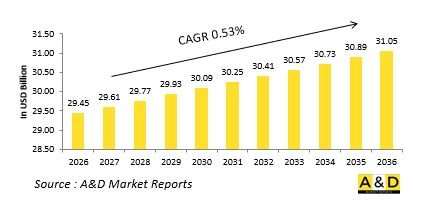
據估計,2026年全球轟炸機市場規模為294.5億美元,預計到2036年將達到310.5億美元,2026年至2036年的複合年增長率為0.53%。
全球轟炸機市場簡介
轟炸機是戰略和戰術平台,旨在遠距離投送武器,執行威懾、精確打擊和區域飽和打擊等任務。現代轟炸機融合了隱身技術、遠程推進系統和先進的航空電子設備,能夠在戰時空域有效滲透,同時最大限度地降低被偵測到的風險。這些飛機既支援常規作戰,也支援核子作戰,從而提供作戰彈性和戰略威懾力。轟炸機的設計重點在於有效載荷能力、航程、生存能力以及與指揮資訊系統的整合。先進的目標指示、導航和電子戰系統提高了打擊精度和任務成功率,同時降低了暴露於敵方防禦系統的風險。各國投資轟炸機是為了維持空中優勢、投射軍事力量並增強威懾力。隱身能力、低可偵測性塗層和雷達規避設計提高了轟炸機在高威脅環境下的生存能力。與無人系統、網路化作戰和多平台協同作戰擴展了作戰範圍並提高了作戰適應性。軍事理論強調快速反應、戰略靈活性和縱深打擊能力,這使得轟炸機成為國家國防戰略的關鍵資產。對先進推進系統、航空電子設備和隱身技術的投資確保轟炸機能夠持續滿足不斷變化的作戰需求,並在現代空戰中保持戰略重要性。
科技對全球轟炸機的影響
技術創新改變了轟炸機,提高了隱身性能、生存能力、有效載荷能力和作戰精度。先進的推進系統延長了航程並提高了燃油效率,使其能夠更快地突破防禦空域。隱身技術,包括雷達吸波材料、低可偵測性設計和電子乾擾,降低了現代防空系統對轟炸機的偵測機率。整合的航空電子設備、導航系統和目標指示系統在各種作戰環境下提供了精確打擊能力。感測器融合、即時情報和數據連接使轟炸機能夠與其他飛機、地面資產和無人平台進行協同作戰。武器整合系統支援各種常規武器和精確導引武器,從而提高了作戰靈活性。自動化和飛行控制技術的進步提高了安全性、作戰效率和應對動態威脅的能力。電子戰和自衛系統增強了轟炸機在面對雷達導引飛彈和防空砲火時的生存能力。材料、空氣動力學和網路化作戰的持續升級使轟炸機機隊能夠適應不斷演變的威脅。科技確保現代化轟炸機始終是戰略資產,能夠進行縱深打擊、快速部署並融入多域作戰。
全球轟炸機需求的關鍵驅動因素
對轟炸機的需求源自於戰略防禦需求、威懾目標和遠程打擊能力。各國尋求能夠投射力量、支持常規和核武作戰並保持空中優勢的平台。隱身技術、航空電子設備、推進系統和武器系統的技術進步,使轟炸機能夠在高強度戰爭環境中保持精確打擊和生存能力。現代軍事理論強調快速反應、多域整合和網路化作戰,提升了轟炸機在戰略規劃中的重要性。地緣政治緊張局勢、領土爭端和地區衝突進一步推動了對靈活遠程打擊能力的需求。機隊現代化計劃和國防預算撥款支持老舊轟炸機的採購、升級和更新。與無人系統、衛星網路和情報平台的整合提升了作戰效率和效能。實戰經驗表明,轟炸機在威懾、縱深打擊和力量投射方面至關重要。戰略要務、技術創新和不斷演進的國防理論推動全球對現代化轟炸機的持續投資和部署。 本報告深入分析了全球轟炸機市場,闡述了影響該市場的技術、未來十年的預測以及區域發展趨勢。
目錄
轟炸機市場報告定義
轟炸機市場細分
按地區
按類型
按引擎
未來十年轟炸機市場分析
轟炸機市場技術
全球轟炸機市場預測
區域轟炸機市場趨勢及預測評估
北美
驅動因素、限制因素與挑戰
PEST分析
市場預測及情境分析
主要公司
供應商層級狀況
公司基準分析
歐洲
中東
亞太地區
南美洲
轟炸機市場國家分析
美國
國防項目
最新消息
專利
當前市場技術成熟度
市場預測與情境分析
加拿大
義大利
法國
德國
荷蘭
比利時
西班牙
瑞典
希臘
澳洲
南非洲
印度
中國
俄羅斯
韓國
日本
馬來西亞
新加坡
巴西
轟炸機市場機會矩陣
專家對轟炸機市場報告的意見
結論
關於航空和國防市場報告
The Global Bomber Aircraft market is estimated at USD 29.45 billion in 2026, projected to grow to USD 31.05 billion by 2036 at a Compound Annual Growth Rate (CAGR) of 0.53% over the forecast period 2026-2036.

Introduction to Global Bomber Aircraft
Bomber aircraft are strategic and tactical platforms designed to deliver ordnance over extended distances, performing roles such as deterrence, precision strikes, and area saturation. Modern bombers integrate stealth technologies, long-range propulsion systems, and advanced avionics to penetrate contested airspace while minimizing detection. These aircraft support both conventional and nuclear missions, providing operational flexibility and strategic deterrence capabilities. Bomber designs emphasize payload capacity, endurance, survivability, and integration with command and intelligence systems. Advanced targeting, navigation, and electronic warfare suites enhance precision and mission success while reducing exposure to adversary defenses. Nations invest in bomber aircraft to maintain air superiority, project power, and strengthen deterrence posture. Stealth features, low-observable coatings, and radar-evading designs improve survivability in high-threat environments. Integration with unmanned systems, networked operations, and multi-platform coordination extends operational reach and enhances mission adaptability. Military doctrines emphasize rapid response, strategic flexibility, and deep strike capability, positioning bomber aircraft as essential assets in national defense strategies. Investment in advanced propulsion, avionics, and stealth technologies ensures that bombers remain capable of meeting evolving operational requirements and maintaining strategic relevance in modern air warfare.
Technology Impact in Global Bomber Aircraft
Technological innovation has transformed bomber aircraft, enhancing stealth, survivability, payload delivery, and operational precision. Advanced propulsion systems extend range, improve fuel efficiency, and allow high-speed penetration of defended airspace. Stealth technologies, including radar-absorbing materials, low-observable design, and electronic countermeasures, reduce detectability against modern air defense systems. Integrated avionics, navigation, and targeting suites enable precise strike capabilities under diverse operational conditions. Sensor fusion, real-time intelligence, and data connectivity allow bombers to coordinate with other aircraft, ground assets, and unmanned platforms. Weapons integration systems support a wide range of conventional and precision-guided munitions, enabling flexible mission execution. Automation and flight control advancements improve safety, operational efficiency, and responsiveness to dynamic threats. Electronic warfare and self-defense systems enhance survivability against radar-guided missiles and anti-aircraft artillery. Continuous upgrades in materials, aerodynamics, and networked operations allow bomber fleets to adapt to evolving threats. Technology ensures that modern bomber aircraft remain strategic assets capable of deep strike, rapid deployment, and integration into multi-domain operations.
Key Drivers in Global Bomber Aircraft
Bomber aircraft demand is driven by strategic defense needs, deterrence objectives, and long-range strike capabilities. Nations seek platforms capable of projecting power, supporting conventional and nuclear missions, and maintaining air superiority. Technological advancements in stealth, avionics, propulsion, and weapons systems enable precise and survivable operations in contested environments. Modern military doctrines emphasize rapid response, multi-domain integration, and networked operations, increasing the importance of bombers in strategic planning. Geopolitical tensions, territorial disputes, and regional conflicts reinforce the need for flexible long-range strike capabilities. Fleet modernization programs and defense budget allocations support the procurement, upgrade, and replacement of legacy bomber aircraft. Integration with unmanned systems, satellite networks, and intelligence platforms enhances operational efficiency and mission effectiveness. Operational experience demonstrates the importance of bombers in deterrence, deep strike, and force projection. Collectively, strategic imperatives, technological innovation, and evolving defense doctrines drive the continued investment and deployment of modern bomber aircraft worldwide.
Regional Trends in Global Bomber Aircraft
Bomber aircraft deployment varies by region based on strategic requirements, technological capabilities, and defense priorities. North America focuses on stealth-enabled, long-range platforms integrated with advanced sensor networks, electronic warfare systems, and multi-domain operations. Europe emphasizes interoperability, precision strike capabilities, and modernization of legacy fleets to maintain deterrence and defense readiness. Asia-Pacific growth is driven by regional security challenges, strategic deterrence, and investment in indigenous production programs. Middle Eastern countries prioritize long-range strike capabilities and force projection to secure territorial and regional interests. African and South American nations selectively adopt bomber platforms for regional defense and strategic deterrence, balancing cost and capability. Across regions, integration with unmanned aerial systems, networked intelligence platforms, and precision munitions enhances operational flexibility. Exercises, joint operations, and fleet modernization programs influence design, acquisition, and deployment. Regional variations in security challenges, defense budgets, and technological infrastructure shape bomber aircraft strategies, reflecting their critical role in maintaining air superiority, strategic deterrence, and operational readiness in contemporary military environments.
Key Bomber Aircraft Program:
Northrop Grumman is expected to finalize an agreement with the U.S. Air Force by the end of March to accelerate production of the B-21 bomber, according to comments made by CEO Kathy Warden on January 27. It was also indicated that the Pentagon and Northrop Grumman have agreed on a third low-rate initial production lot as the next-generation stealth bomber progresses toward operational readiness. To support increased production capacity, Congress approved $4.5 billion last July as part of a broader reconciliation package. Government and industry officials had already been working through key implementation details ahead of the formal funding approval.
Table of Contents
Bomber Aircraft Market - Table of Contents
Bomber Aircraft Market Report Definition
Bomber Aircraft Market Segmentation
By Region
By Type
By Engine
Bomber Aircraft Market Analysis for next 10 Years
The 10-year bomber aircraft market analysis would give a detailed overview of bomber aircraft market growth, changing dynamics, technology adoption overviews and the overall market attractiveness is covered in this chapter.
Market Technologies of Bomber Aircraft Market
This segment covers the top 10 technologies that is expected to impact this market and the possible implications these technologies would have on the overall market.
Global Bomber Aircraft Market Forecast
The 10-year bomber aircraft market forecast of this market is covered in detailed across the segments which are mentioned above.
Regional Bomber Aircraft Market Trends & Forecast
The regional Bomber Aircraft Market trends, drivers, restraints and Challenges of this market, the Political, Economic, Social and Technology aspects are covered in this segment. The market forecast and scenario analysis across regions are also covered in detailed in this segment. The last part of the regional analysis includes profiling of the key companies, supplier landscape and company benchmarking. The current market size is estimated based on the normal scenario.
North America
Drivers, Restraints and Challenges
PEST
Market Forecast & Scenario Analysis
Key Companies
Supplier Tier Landscape
Company Benchmarking
Europe
Middle East
APAC
South America
Country Analysis of Bomber Aircraft Market
This chapter deals with the key defense programs in this market, it also covers the latest news and patents which have been filed in this market. Country level 10 year market forecast and scenario analysis are also covered in this chapter.
US
Defense Programs
Latest News
Patents
Current levels of technology maturation in this market
Market Forecast & Scenario Analysis
Canada
Italy
France
Germany
Netherlands
Belgium
Spain
Sweden
Greece
Australia
South Africa
India
China
Russia
South Korea
Japan
Malaysia
Singapore
Brazil
Opportunity Matrix for Bomber Aircraft Market
The opportunity matrix helps the readers understand the high opportunity segments in this market.
Expert Opinions on Bomber Aircraft Market Report
Hear from our experts their opinion of the possible analysis for this market.
Conclusions
About Aviation and Defense Market Reports
List of Tables
- Table 1: 10 Year Market Outlook, 2026-2036
- Table 2: Drivers, Impact Analysis, North America
- Table 3: Restraints, Impact Analysis, North America
- Table 4: Challenges, Impact Analysis, North America
- Table 5: Drivers, Impact Analysis, Europe
- Table 6: Restraints, Impact Analysis, Europe
- Table 7: Challenges, Impact Analysis, Europe
- Table 8: Drivers, Impact Analysis, Middle East
- Table 9: Restraints, Impact Analysis, Middle East
- Table 10: Challenges, Impact Analysis, Middle East
- Table 11: Drivers, Impact Analysis, APAC
- Table 12: Restraints, Impact Analysis, APAC
- Table 13: Challenges, Impact Analysis, APAC
- Table 14: Drivers, Impact Analysis, South America
- Table 15: Restraints, Impact Analysis, South America
- Table 16: Challenges, Impact Analysis, South America
- Table 17: Scenario Analysis, Scenario 1, By Region, 2026-2036
- Table 18: Scenario Analysis, Scenario 1, By Type, 2026-2036
- Table 19: Scenario Analysis, Scenario 1, By Engine, 2026-2036
- Table 20: Scenario Analysis, Scenario 2, By Region, 2026-2036
- Table 21: Scenario Analysis, Scenario 2, By Type, 2026-2036
- Table 22: Scenario Analysis, Scenario 2, By Engine, 2026-2036
List of Figures
- Figure 1: Global Bomber Aircraft Market Forecast, 2026-2036
- Figure 2: Global Bomber Aircraft Market Forecast, By Region, 2026-2036
- Figure 3: Global Bomber Aircraft Market Forecast, By Type, 2026-2036
- Figure 4: Global Bomber Aircraft Market Forecast, By Engine, 2026-2036
- Figure 5: North America, Bomber Aircraft Market, Market Forecast, 2026-2036
- Figure 6: Europe, Bomber Aircraft Market, Market Forecast, 2026-2036
- Figure 7: Middle East, Bomber Aircraft Market, Market Forecast, 2026-2036
- Figure 8: APAC, Bomber Aircraft Market, Market Forecast, 2026-2036
- Figure 9: South America, Bomber Aircraft Market, Market Forecast, 2026-2036
- Figure 10: United States, Bomber Aircraft Market, Technology Maturation, 2026-2036
- Figure 11: United States, Bomber Aircraft Market, Market Forecast, 2026-2036
- Figure 12: Canada, Bomber Aircraft Market, Technology Maturation, 2026-2036
- Figure 13: Canada, Bomber Aircraft Market, Market Forecast, 2026-2036
- Figure 14: Italy, Bomber Aircraft Market, Technology Maturation, 2026-2036
- Figure 15: Italy, Bomber Aircraft Market, Market Forecast, 2026-2036
- Figure 16: France, Bomber Aircraft Market, Technology Maturation, 2026-2036
- Figure 17: France, Bomber Aircraft Market, Market Forecast, 2026-2036
- Figure 18: Germany, Bomber Aircraft Market, Technology Maturation, 2026-2036
- Figure 19: Germany, Bomber Aircraft Market, Market Forecast, 2026-2036
- Figure 20: Netherlands, Bomber Aircraft Market, Technology Maturation, 2026-2036
- Figure 21: Netherlands, Bomber Aircraft Market, Market Forecast, 2026-2036
- Figure 22: Belgium, Bomber Aircraft Market, Technology Maturation, 2026-2036
- Figure 23: Belgium, Bomber Aircraft Market, Market Forecast, 2026-2036
- Figure 24: Spain, Bomber Aircraft Market, Technology Maturation, 2026-2036
- Figure 25: Spain, Bomber Aircraft Market, Market Forecast, 2026-2036
- Figure 26: Sweden, Bomber Aircraft Market, Technology Maturation, 2026-2036
- Figure 27: Sweden, Bomber Aircraft Market, Market Forecast, 2026-2036
- Figure 28: Brazil, Bomber Aircraft Market, Technology Maturation, 2026-2036
- Figure 29: Brazil, Bomber Aircraft Market, Market Forecast, 2026-2036
- Figure 30: Australia, Bomber Aircraft Market, Technology Maturation, 2026-2036
- Figure 31: Australia, Bomber Aircraft Market, Market Forecast, 2026-2036
- Figure 32: India, Bomber Aircraft Market, Technology Maturation, 2026-2036
- Figure 33: India, Bomber Aircraft Market, Market Forecast, 2026-2036
- Figure 34: China, Bomber Aircraft Market, Technology Maturation, 2026-2036
- Figure 35: China, Bomber Aircraft Market, Market Forecast, 2026-2036
- Figure 36: Saudi Arabia, Bomber Aircraft Market, Technology Maturation, 2026-2036
- Figure 37: Saudi Arabia, Bomber Aircraft Market, Market Forecast, 2026-2036
- Figure 38: South Korea, Bomber Aircraft Market, Technology Maturation, 2026-2036
- Figure 39: South Korea, Bomber Aircraft Market, Market Forecast, 2026-2036
- Figure 40: Japan, Bomber Aircraft Market, Technology Maturation, 2026-2036
- Figure 41: Japan, Bomber Aircraft Market, Market Forecast, 2026-2036
- Figure 42: Malaysia, Bomber Aircraft Market, Technology Maturation, 2026-2036
- Figure 43: Malaysia, Bomber Aircraft Market, Market Forecast, 2026-2036
- Figure 44: Singapore, Bomber Aircraft Market, Technology Maturation, 2026-2036
- Figure 45: Singapore, Bomber Aircraft Market, Market Forecast, 2026-2036
- Figure 46: United Kingdom, Bomber Aircraft Market, Technology Maturation, 2026-2036
- Figure 47: United Kingdom, Bomber Aircraft Market, Market Forecast, 2026-2036
- Figure 48: Opportunity Analysis, Bomber Aircraft Market, By Region (Cumulative Market), 2026-2036
- Figure 49: Opportunity Analysis, Bomber Aircraft Market, By Region (CAGR), 2026-2036
- Figure 50: Opportunity Analysis, Bomber Aircraft Market, By Type (Cumulative Market), 2026-2036
- Figure 51: Opportunity Analysis, Bomber Aircraft Market, By Type (CAGR), 2026-2036
- Figure 52: Opportunity Analysis, Bomber Aircraft Market, By Engine (Cumulative Market), 2026-2036
- Figure 53: Opportunity Analysis, Bomber Aircraft Market, By Engine (CAGR), 2026-2036
- Figure 54: Scenario Analysis, Bomber Aircraft Market, Cumulative Market, 2026-2036
- Figure 55: Scenario Analysis, Bomber Aircraft Market, Global Market, 2026-2036
- Figure 56: Scenario 1, Bomber Aircraft Market, Total Market, 2026-2036
- Figure 57: Scenario 1, Bomber Aircraft Market, By Region, 2026-2036
- Figure 58: Scenario 1, Bomber Aircraft Market, By Type, 2026-2036
- Figure 59: Scenario 1, Bomber Aircraft Market, By Engine, 2026-2036
- Figure 60: Scenario 2, Bomber Aircraft Market, Total Market, 2026-2036
- Figure 61: Scenario 2, Bomber Aircraft Market, By Region, 2026-2036
- Figure 62: Scenario 2, Bomber Aircraft Market, By Type, 2026-2036
- Figure 63: Scenario 2, Bomber Aircraft Market, By Engine, 2026-2036
- Figure 64: Company Benchmark, Bomber Aircraft Market, 2026-2036
