


 |
市場調查報告書
商品編碼
1508611
轟炸機的全球市場 (2024~2034年)Global Bomber Aircraft Market 2024-2034 |
||||||

2024 年全球轟炸機市場預計為 299.4 億美元,預計 2024 年至 2034 年複合年增長率為 2.73%,到 2030 年將達到 326.5 億美元。
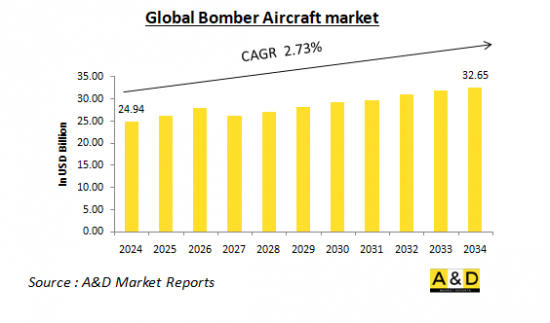
全球轟炸機市場概況
全球轟炸機市場在軍事航空領域發揮重要作用,為各國提供執行遠程打擊任務和威懾的戰略能力。轟炸機旨在向遠處目標運送大量彈藥,已成為世界各地軍事力量不可或缺的一部分。這些飛機能夠攜帶重型有效載荷,例如炸彈、飛彈,有時還攜帶非常規武器,並發揮從戰術支援到戰略核威懾的廣泛作用。
科技對全球轟炸機市場的影響
科技進步大大改變了轟炸機的能力和效率。現代轟炸機整合了尖端航空電子設備、隱形技術和先進武器系統,以增強生存能力、精確打擊能力和作戰範圍。特別是,隱形技術減少了飛機的雷達截面積並提高了其在衝突空域的生存能力。此外,材料和推進系統的進步提高了燃油效率和操作耐久性,使轟炸機無需加油即可執行更長的任務。
數位通訊系統和 "網路中心戰" 能力的整合可以實現轟炸機機隊和其他軍事資產之間的即時數據共享和聯合任務規劃。此外,自主飛行技術和人工智慧(AI)的進步預計將徹底改變轟炸機的角色,提高其在複雜和競爭環境中自主運作的能力。
全球轟炸機市場的主要驅動力
有幾個因素促進了全球轟炸機市場的成長和發展。首先,世界各地不斷加劇的地緣政治緊張局勢要求各國投資先進的轟炸能力以實現戰略威懾。這些飛機對潛在對手具有強大的威懾作用,並透過允許各國向大面積投射力量來加強國家安全。其次,各國正在進行的軍事現代化計劃的趨勢發揮著至關重要的作用。各國政府正在優先考慮建立其軍隊的能力,以便在快速發展的全球安全格局中保持競爭力,而投資轟炸機對於這些努力至關重要。第三,飛機設計、航空電子設備、隱身技術和武器系統的持續技術進步將顯著提高轟炸機機隊的作戰效率和生存能力。政府和國防承包商正在研發方面進行大量投資,將尖端技術整合到轟炸機平台中,確保轟炸機始終處於軍事創新的前沿。此外,轟炸機使用遠程彈藥進行精確打擊的能力是市場需求的關鍵驅動力。精確導引武器使轟炸機能夠以最小的附帶損害攻擊關鍵基礎設施、軍事設施和高價值目標,從而提高其戰略相關性。最後,轟炸機通常具有雙重用途能力,可在常規戰爭和核??威懾戰略中發揮作用。這種多功能性使其成為國防戰略和全球軍事行動的重要資產,進一步凸顯了其在現代國防格局中的重要性。
全球轟炸機市場的區域趨勢
全球轟炸機市場呈現出受地緣政治因素、國防支出和技術進步影響的獨特區域動態。北美,特別是美國,擁有強大的機隊主導市場,其中包括 B-52 Stratofortress、B-1 Lancer 和 B-2 Spirit 等標誌性轟炸機。美國繼續大力投資其轟炸機現代化計劃,以增強隱身能力、整合先進的航空電子系統並擴大作戰範圍。此外,美國利用其轟炸機機隊進行全球力量投射和戰略威懾,凸顯其在全球軍事戰略中的關鍵作用。
在整個歐洲,英國、法國和俄羅斯等國家都保持著主動轟炸能力,儘管它們與美國相比規模較小。這些國家正在優先考慮持續的現代化努力,以適應不斷變化的安全威脅,並為北約的國防願景做出有效貢獻。歐盟(EU)和北約內部的合作正在促進先進轟炸機技術的共同開發和採購,並增強成員國之間的區域防禦能力和互通性。
在亞太地區,由於國防開支增加、領土爭端和地緣政治緊張局勢,轟炸機能力正在顯著增強。中國因其轟炸機機隊的大規模擴張而引人注目,其中包括轟6等平台和能夠執行遠程任務的戰略轟炸機。印度和日本也在增強轟炸能力,應對區域安全動態,強化軍事態勢,以加強區域安全和戰略威懾。
在中東和非洲,沙烏地阿拉伯和以色列等國家擁有現代化轟炸機機隊,以應對特定的地區安全課題並在整個中東地區發揮影響力。這些國家正在優先投資轟炸機現代化計劃,旨在加強作戰能力並保持對該地區潛在對手的戰略威懾。總而言之,這些區域趨勢凸顯了推動世界不同地區全球轟炸機市場的多樣化策略需求和營運要求。
主要轟炸機計畫
諾斯羅普格魯曼公司已獲得美國空軍一份價值高達 70 億美元的重大合同,旨在對其 B-2 Spirit 隱形轟炸機進行現代化改造並增強其能力。該合約有效期至2029年,旨在維持和提高B-2機隊的性能,預計該機隊將於2030年代初退役並由B-21襲擊者取代。該合約是 B-2 機隊現代化的一個重要里程碑,確保其持續有效和可靠,直至最終退役。
美國國防部授予波音公司一份為期五年、價值 7.5 億美元的合同,為空軍的 B-1 轟炸機提供支援服務。該合約包括一年基期和四個一年選項,涵蓋一系列綜合工程服務,包括電腦網路支援、技術分析、飛行安全分析和潛在增強工作。該合約由國防部宣布,是國防部持續維護和現代化其轟炸機機隊的努力的一部分。
本報告提供全球轟炸機市場相關分析,提供整體市場規模趨勢預測,及各地區·各國詳細趨勢,主要技術的概要,市場機會等資訊。
目錄
轟炸機市場:報告定義
轟炸機市場明細
- 各地區
- 各類型
- 各引擎
轟炸機市場分析 (今後10年)
轟炸機市場市場科技
全球轟炸機市場預測
轟炸機市場:各地區的趨勢與預測
- 北美
- 促進·阻礙因素,課題
- PEST分析
- 市場預測與情勢分析
- 主要企業
- 供應商階層的形勢
- 企業的基準
- 歐洲
- 中東
- 亞太地區
- 南美
轟炸機市場:各國分析
- 美國
- 防衛計劃
- 最新趨勢
- 專利
- 這個市場上目前技術成熟等級
- 市場預測與情勢分析
- 加拿大
- 義大利
- 法國
- 德國
- 荷蘭
- 比利時
- 西班牙
- 瑞典
- 希臘
- 澳洲
- 南非
- 印度
- 中國
- 俄羅斯
- 韓國
- 日本
- 馬來西亞
- 新加坡
- 巴西
轟炸機市場:市場機會矩陣
轟炸機市場:調查相關專家的見解
結論
關於Aviation and Defense Market Reports
The global Bomber Aircraft market is estimated at USD 29.94 billion in 2024, projected to grow to USD 32.65 billion by 2034 at a Compound Annual Growth Rate (CAGR) of 2.73% over the forecast period 2024-2034
Introduction to Bomber Aircraft Market
The global bomber aircraft market plays a crucial role in military aviation, providing nations with strategic capabilities for long-range strike missions and deterrence. Bomber aircraft are designed to deliver large payloads of munitions to distant targets, making them essential components of military forces worldwide. These aircraft are characterized by their ability to carry heavy payloads of bombs, missiles, and sometimes unconventional weapons, fulfilling roles from tactical support to strategic nuclear deterrence.
Technology Impact in Bomber Aircraft Market
Technological advancements have significantly transformed the capabilities and effectiveness of bomber aircraft. Modern bombers integrate state-of-the-art avionics, stealth technology, and advanced weapon systems to enhance survivability, precision strike capabilities, and operational range. Stealth technology, in particular, reduces the aircraft's radar cross-section, enhancing its survivability in contested airspace. Moreover, advancements in materials and propulsion systems have improved fuel efficiency and operational endurance, allowing bombers to conduct longer missions without refueling.
The integration of digital communication systems and network-centric warfare capabilities enables real-time data sharing and collaborative mission planning among bomber fleets and other military assets. Furthermore, advancements in autonomous flight technologies and artificial intelligence (AI) are expected to revolutionize the role of bombers, enhancing their ability to operate in complex and contested environments autonomously.
Key Drivers in Bomber Aircraft Market
Several factors contribute to the growth and development of the global bomber aircraft market. Firstly, rising geopolitical tensions worldwide necessitate nations to invest in advanced bomber capabilities for strategic deterrence purposes. These aircraft serve as potent deterrents against potential adversaries and enable countries to project power over extensive distances, thereby bolstering national security. Secondly, the ongoing trend of military modernization programs across various countries plays a pivotal role. Governments prioritize the enhancement of their armed forces' capabilities to maintain competitiveness in a rapidly evolving global security landscape, with investments in bomber aircraft being integral to these efforts. Thirdly, continuous technological advancements in aircraft design, avionics, stealth technology, and weapon systems significantly enhance the operational efficiency and survivability of bomber fleets. Governments and defense contractors invest extensively in research and development to integrate cutting-edge technologies into bomber platforms, ensuring they remain at the forefront of military innovation. Moreover, the capability of bombers to deliver precision strikes with long-range munitions is a crucial driver of market demand. Precision-guided weapons enable bombers to target critical infrastructure, military installations, and high-value targets with minimal collateral damage, thereby increasing their strategic relevance. Lastly, bomber aircraft often possess dual-use capabilities, fulfilling roles in both conventional warfare and nuclear deterrence strategies. This versatility makes them indispensable assets for national defense strategies and global military operations, further underscoring their importance in the contemporary defense landscape.
Regional Trends in Bomber Aircraft Market
The global bomber aircraft market demonstrates distinct regional dynamics shaped by geopolitical factors, defense spending, and technological advancements. In North America, particularly the United States, dominates the market with a formidable fleet that includes iconic bombers such as the B-52 Stratofortress, B-1 Lancer, and B-2 Spirit. The US maintains substantial investments in bomber modernization programs aimed at enhancing stealth capabilities, integrating advanced avionics systems, and extending operational ranges. Furthermore, the US employs its bomber fleet for global power projection and strategic deterrence, underscoring its pivotal role in global military strategy.
Across Europe, nations like the United Kingdom, France, and Russia maintain active bomber aircraft capabilities, albeit on a smaller scale compared to the US. These countries prioritize ongoing modernization efforts to adapt to evolving security threats and contribute effectively to NATO defense initiatives. Collaborative endeavors within the European Union and NATO facilitate joint development and procurement of advanced bomber technologies, fostering regional defense capabilities and interoperability among member states.
In the Asia-Pacific region, there is notable growth in bomber aircraft capabilities driven by increasing defense expenditures, territorial disputes, and geopolitical tensions. China stands out with significant expansions in its bomber fleet, including platforms like the H-6 and strategic bombers capable of executing long-range missions. India and Japan are also augmenting their bomber capabilities to bolster regional security and strategic deterrence, responding to regional security dynamics and enhancing their military posture.
In the Middle East and Africa, countries such as Saudi Arabia and Israel maintain modern bomber aircraft fleets to address specific regional security challenges and exert influence across the Middle East. These nations prioritize investments in bomber modernization programs aimed at enhancing operational capabilities and maintaining strategic deterrence against potential adversaries within the region. Collectively, these regional trends underscore the diverse strategic imperatives and operational requirements driving the global bomber aircraft market in different parts of the world.
Key Bomber Aircrafts Program
Northrop Grumman has secured a significant contract worth up to $7 billion from the United States Air Force to modernize and enhance the capabilities of the B-2 Spirit stealth bomber fleet. The contract, which runs through 2029, aims to sustain and improve the performance of the B-2 fleet, which is expected to be retired in the early 2030s and replaced by the B-21 Raider. This deal marks a significant milestone in the modernization of the B-2 fleet, ensuring its continued effectiveness and reliability until its eventual retirement.
The U.S. Department of Defense has awarded Boeing a five-year contract worth $750 million to provide support services for the Air Force's B-1 bomber fleet. The contract, which includes a one-year base period and four one-year options, covers a range of integrated engineering services such as computer network support, technical analysis, flight safety analysis, and potential enhancement work. This contract award was announced by the Pentagon and is part of the Department of Defense's ongoing efforts to maintain and modernize its bomber aircraft fleet.
Table of Contents
Table of Contents
Bomber Aircraft Market Report Definition
Bomber Aircraft Market Segmentation
By Region
By Type
By Engine
Bomber Aircraft Market Analysis for next 10 Years
The 10-year bomber aircraft market analysis would give a detailed overview of bomber aircraft market growth, changing dynamics, technology adoption overviews and the overall market attractiveness is covered in this chapter.
Market Technologies of Bomber Aircraft Market
This segment covers the top 10 technologies that is expected to impact this market and the possible implications these technologies would have on the overall market.
Global Bomber Aircraft Market Forecast
The 10-year bomber aircraft market forecast of this market is covered in detailed across the segments which are mentioned above.
Regional Bomber Aircraft Market Trends & Forecast
The regional Bomber Aircraft Market trends, drivers, restraints and Challenges of this market, the Political, Economic, Social and Technology aspects are covered in this segment. The market forecast and scenario analysis across regions are also covered in detailed in this segment. The last part of the regional analysis includes profiling of the key companies, supplier landscape and company benchmarking. The current market size is estimated based on the normal scenario.
North America
Drivers, Restraints and Challenges
PEST
Market Forecast & Scenario Analysis
Key Companies
Supplier Tier Landscape
Company Benchmarking
Europe
Middle East
APAC
South America
Country Analysis of Bomber Aircraft Market
This chapter deals with the key defense programs in this market, it also covers the latest news and patents which have been filed in this market. Country level 10 year market forecast and scenario analysis are also covered in this chapter.
US
Defense Programs
Latest News
Patents
Current levels of technology maturation in this market
Market Forecast & Scenario Analysis
Canada
Italy
France
Germany
Netherlands
Belgium
Spain
Sweden
Greece
Australia
South Africa
India
China
Russia
South Korea
Japan
Malaysia
Singapore
Brazil
Opportunity Matrix for Bomber Aircraft Market
The opportunity matrix helps the readers understand the high opportunity segments in this market.
Expert Opinions on Bomber Aircraft Market Report
Hear from our experts their opinion of the possible analysis for this market.
Conclusions
About Aviation and Defense Market Reports
List of Tables
- Table 1: 10 Year Market Outlook, 2024-2034
- Table 2: Drivers, Impact Analysis, North America
- Table 3: Restraints, Impact Analysis, North America
- Table 4: Challenges, Impact Analysis, North America
- Table 5: Drivers, Impact Analysis, Europe
- Table 6: Restraints, Impact Analysis, Europe
- Table 7: Challenges, Impact Analysis, Europe
- Table 8: Drivers, Impact Analysis, Middle East
- Table 9: Restraints, Impact Analysis, Middle East
- Table 10: Challenges, Impact Analysis, Middle East
- Table 11: Drivers, Impact Analysis, APAC
- Table 12: Restraints, Impact Analysis, APAC
- Table 13: Challenges, Impact Analysis, APAC
- Table 14: Drivers, Impact Analysis, South America
- Table 15: Restraints, Impact Analysis, South America
- Table 16: Challenges, Impact Analysis, South America
- Table 17: Scenario Analysis, Scenario 1, By Region, 2024-2034
- Table 18: Scenario Analysis, Scenario 1, By Type, 2024-2034
- Table 19: Scenario Analysis, Scenario 1, By Engine, 2024-2034
- Table 20: Scenario Analysis, Scenario 2, By Region, 2024-2034
- Table 21: Scenario Analysis, Scenario 2, By Type, 2024-2034
- Table 22: Scenario Analysis, Scenario 2, By Engine, 2024-2034
List of Figures
- Figure 1: Global Bomber Aircraft Market Forecast, 2024-2034
- Figure 2: Global Bomber Aircraft Market Forecast, By Region, 2024-2034
- Figure 3: Global Bomber Aircraft Market Forecast, By Type, 2024-2034
- Figure 4: Global Bomber Aircraft Market Forecast, By Engine, 2024-2034
- Figure 5: North America, Bomber Aircraft Market, Market Forecast, 2024-2034
- Figure 6: Europe, Bomber Aircraft Market, Market Forecast, 2024-2034
- Figure 7: Middle East, Bomber Aircraft Market, Market Forecast, 2024-2034
- Figure 8: APAC, Bomber Aircraft Market, Market Forecast, 2024-2034
- Figure 9: South America, Bomber Aircraft Market, Market Forecast, 2024-2034
- Figure 10: United States, Bomber Aircraft Market, Technology Maturation, 2024-2034
- Figure 11: United States, Bomber Aircraft Market, Market Forecast, 2024-2034
- Figure 12: Canada, Bomber Aircraft Market, Technology Maturation, 2024-2034
- Figure 13: Canada, Bomber Aircraft Market, Market Forecast, 2024-2034
- Figure 14: Italy, Bomber Aircraft Market, Technology Maturation, 2024-2034
- Figure 15: Italy, Bomber Aircraft Market, Market Forecast, 2024-2034
- Figure 16: France, Bomber Aircraft Market, Technology Maturation, 2024-2034
- Figure 17: France, Bomber Aircraft Market, Market Forecast, 2024-2034
- Figure 18: Germany, Bomber Aircraft Market, Technology Maturation, 2024-2034
- Figure 19: Germany, Bomber Aircraft Market, Market Forecast, 2024-2034
- Figure 20: Netherlands, Bomber Aircraft Market, Technology Maturation, 2024-2034
- Figure 21: Netherlands, Bomber Aircraft Market, Market Forecast, 2024-2034
- Figure 22: Belgium, Bomber Aircraft Market, Technology Maturation, 2024-2034
- Figure 23: Belgium, Bomber Aircraft Market, Market Forecast, 2024-2034
- Figure 24: Spain, Bomber Aircraft Market, Technology Maturation, 2024-2034
- Figure 25: Spain, Bomber Aircraft Market, Market Forecast, 2024-2034
- Figure 26: Sweden, Bomber Aircraft Market, Technology Maturation, 2024-2034
- Figure 27: Sweden, Bomber Aircraft Market, Market Forecast, 2024-2034
- Figure 28: Brazil, Bomber Aircraft Market, Technology Maturation, 2024-2034
- Figure 29: Brazil, Bomber Aircraft Market, Market Forecast, 2024-2034
- Figure 30: Australia, Bomber Aircraft Market, Technology Maturation, 2024-2034
- Figure 31: Australia, Bomber Aircraft Market, Market Forecast, 2024-2034
- Figure 32: India, Bomber Aircraft Market, Technology Maturation, 2024-2034
- Figure 33: India, Bomber Aircraft Market, Market Forecast, 2024-2034
- Figure 34: China, Bomber Aircraft Market, Technology Maturation, 2024-2034
- Figure 35: China, Bomber Aircraft Market, Market Forecast, 2024-2034
- Figure 36: Saudi Arabia, Bomber Aircraft Market, Technology Maturation, 2024-2034
- Figure 37: Saudi Arabia, Bomber Aircraft Market, Market Forecast, 2024-2034
- Figure 38: South Korea, Bomber Aircraft Market, Technology Maturation, 2024-2034
- Figure 39: South Korea, Bomber Aircraft Market, Market Forecast, 2024-2034
- Figure 40: Japan, Bomber Aircraft Market, Technology Maturation, 2024-2034
- Figure 41: Japan, Bomber Aircraft Market, Market Forecast, 2024-2034
- Figure 42: Malaysia, Bomber Aircraft Market, Technology Maturation, 2024-2034
- Figure 43: Malaysia, Bomber Aircraft Market, Market Forecast, 2024-2034
- Figure 44: Singapore, Bomber Aircraft Market, Technology Maturation, 2024-2034
- Figure 45: Singapore, Bomber Aircraft Market, Market Forecast, 2024-2034
- Figure 46: United Kingdom, Bomber Aircraft Market, Technology Maturation, 2024-2034
- Figure 47: United Kingdom, Bomber Aircraft Market, Market Forecast, 2024-2034
- Figure 48: Opportunity Analysis, Bomber Aircraft Market, By Region (Cumulative Market), 2024-2034
- Figure 49: Opportunity Analysis, Bomber Aircraft Market, By Region (CAGR), 2024-2034
- Figure 50: Opportunity Analysis, Bomber Aircraft Market, By Type (Cumulative Market), 2024-2034
- Figure 51: Opportunity Analysis, Bomber Aircraft Market, By Type (CAGR), 2024-2034
- Figure 52: Opportunity Analysis, Bomber Aircraft Market, By Engine (Cumulative Market), 2024-2034
- Figure 53: Opportunity Analysis, Bomber Aircraft Market, By Engine (CAGR), 2024-2034
- Figure 54: Scenario Analysis, Bomber Aircraft Market, Cumulative Market, 2024-2034
- Figure 55: Scenario Analysis, Bomber Aircraft Market, Global Market, 2024-2034
- Figure 56: Scenario 1, Bomber Aircraft Market, Total Market, 2024-2034
- Figure 57: Scenario 1, Bomber Aircraft Market, By Region, 2024-2034
- Figure 58: Scenario 1, Bomber Aircraft Market, By Type, 2024-2034
- Figure 59: Scenario 1, Bomber Aircraft Market, By Engine, 2024-2034
- Figure 60: Scenario 2, Bomber Aircraft Market, Total Market, 2024-2034
- Figure 61: Scenario 2, Bomber Aircraft Market, By Region, 2024-2034
- Figure 62: Scenario 2, Bomber Aircraft Market, By Type, 2024-2034
- Figure 63: Scenario 2, Bomber Aircraft Market, By Engine, 2024-2034
- Figure 64: Company Benchmark, Bomber Aircraft Market, 2024-2034

