


 |
市場調查報告書
商品編碼
1996992
全球國防皮託管靜壓探頭市場:2026-2036年Global Defense Pitot-Static Probes Market 2026-2036 |
||||||

全球國防皮託管靜壓探頭市場
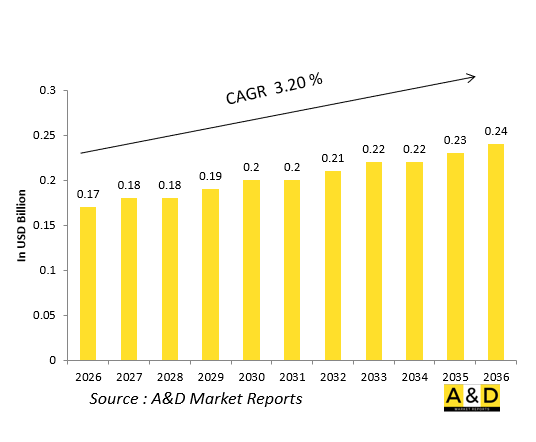
2026 年全球國防皮託管靜壓探頭市場規模估計為 1.7 億美元,預計在 2026 年至 2036 年的預測期內將以 3.20% 的複合年成長率成長,到 2036 年達到 2.4 億美元。
1. 引言:
防禦型皮託管靜壓探頭是安裝在軍用飛機、無人機和某些飛彈上的關鍵氣動感測器,用於測量動態和靜態大氣壓力。這使得人們能夠推導出關鍵的飛行參數,例如空速、高度、垂直速度和馬赫數。這些探頭將資料傳輸到氣動資料電腦和飛行控制系統,成為在整個作戰範圍內安全、精確飛行管理的主要輸入要素之一。從2026年到2036年,依賴可靠、高精度壓力感測的有人和無人平台的持續運作和現代化改造將塑造防禦型皮託管靜壓探頭市場。
隨著空軍部署先進戰鬥機、教練機、海上巡邏機和無人作戰飛機系統,對能夠在極端速度、高度和環境條件下運行的堅固耐用、動態最佳化的皮託管的需求持續成長。即使是進行延壽維修的老舊飛機也需要更換與最新氣動資料和飛行控制架構相容的皮託管。同時,以安全為中心的事故緩解和冗餘增強計劃正在推動多感測器皮託管組件的普及,這些組件降低了測量源故障的風險,並具備加熱和除冰功能。這些特性雖然常常被忽視,但卻鞏固了皮託管作為國防航空電子生態系基本組成部分的地位。
2. 科技對國防皮託管市場的影響
這項技術並非取代其他測量方法,而是透過改進材料、空氣動力學外形和整合式感測器電子元件來提升防禦型皮託管靜壓探頭的性能。現代探頭採用先進的合金和複合材料外殼,具有耐腐蝕、耐熱和抗結冰的特性,即使在惡劣的海洋、高空和乾旱環境中也能確保可靠運作。加熱式探頭設計和整合的結冰偵測電路有助於減少因堵塞引起的故障,尤其是在寒冷和高濕度環境下,從而提高資料完整性和安全裕度。
小型化和多埠配置使得單一探頭組件能夠支援多個空速資料通道,從而支援冗餘和容錯架構,且不會增加外部阻力或複雜性。與數位空速電腦的整合可實現連續的狀態監測、校準和位置誤差校正,從而提高衍生參數的精度。先進製造技術,例如精密加工和積層製造,能夠實現更小的公差和高度可重複的性能。同時,設計人員正不斷最佳化探頭的形狀和位置,以最大限度地減少與其他飛機天線和天線場的干擾。這些進步共同提升了可靠性、測量精度和運行安全性,尤其是在高性能和無人平台上。
3. 國防皮託管靜壓探頭市場的主要促進因素
國防皮託管市場的主要驅動力在於,需要確保種類繁多且日益老化的軍用飛機和無人系統能夠安全、準確地收集飛行數據。隨著空軍在繼續使用傳統平台的同時,不斷引進新一代戰鬥機、教練機和無人機,對經過校準、高度可靠的皮託管感測設備的需求依然強勁,這些設備能夠為空速電腦和飛行控制系統提供資訊。皮託管堵塞和故障導致的安全事故凸顯了堅固耐用、冗餘設計以及加熱皮託管的重要性,尤其是在海上和高空作業環境中。
另一個重要因素是老舊飛機的持續現代化改造和延壽。這包括用與升級的航空電子設備和數位線傳架構相容的部件替換磨損或過時的探頭硬體。無人作戰飛行器(UAV)和長途飛行無人機專案的擴展也催生了對緊湊、輕巧的皮託管的需求,這些皮託管可以整合到更小的機身中,而不會影響氣動效率。出口平台通常要求探頭符合國際認證和互通性標準,這推動了標準化外形規格和介面定義的開發。同時,安全法規和軍用航空標準要求探頭具備可靠的設計、狀態監控功能和故障檢測方案,這使得皮託管成為更廣泛的航空安全架構中不可或缺的一部分。
4. 國防皮託管靜壓探頭市場區域趨勢
從區域層面來看,北美仍然是先進皮託管設計和生產的中心,這得益於其大規模的戰鬥機、教練機、海上巡邏機和無人機項目,這些項目優先考慮安全性、冗餘性和與現代空中數據系統的整合。美國及其合作夥伴經營著一支多樣化的機隊,這些機隊依賴標準化的皮託管架構,從而推動了對堅固耐用、多端口且具有加熱功能的皮託管設計的需求,這些設計需兼容傳統平台和下一代平台。
在歐洲,聯合戰鬥航空和多用途項目正在推動通用皮託管標準,以支援各國空軍之間的互通性和後勤共用。在亞太地區,隨著多國空軍對其裝備進行現代化改造並擴大國產無人機和教練機的生產,對皮託管的需求日益成長,促使各國加大本地和聯合研發力度,以推進皮託管的整合和認證。在中東和海灣國家,由於多代飛機在嚴酷的沙漠和海洋性氣候條件下運行,各國正增加對耐用、加熱和防冰皮託管的投資,以確保可靠的空速和高度數據。在每個地區,對模組化、可更換的皮託管單元的需求都在不斷成長,這些單元無需對飛機進行大規模改裝即可更換或升級,同時,對能夠最大限度減少對附近航空電子設備和天線電磁干擾的設計也提出了更高的要求。
5. 主要國防皮託管市場項目
2026年至2036年間,多項重大國防計畫正推動皮託管靜壓探頭市場的發展。新一代戰鬥機和多用途戰鬥機舉措需要先進的皮託管靜壓探頭組件,這些組件需與數位空速電腦和飛行控制系統緊密整合,以支援高精度輸入,從而實現飛行包線保護和機動性增強功能。海軍航空兵和艦載打擊工程則需要堅固耐用、耐腐蝕的探頭,能夠在高鹽度海洋環境和高攻角甲板著艦過程中可靠運作。
在無人作戰飛行器(UAV)和遠程無人機專案中,緊湊輕巧的皮託管被用於最大限度地降低阻力、簡化安裝,同時在各種速度和高度範圍內保持精度。在教練機計畫中,強調採用與戰鬥機相符的標準化皮託管設計,從而獲得更真實的空氣動力學數據,並縮短飛行員的過渡時間。在多國和聯盟層級的專案中,建議採用通用的皮託管介面和資料格式,以支援聯合物流、認證包和戰區內資訊交換策略。皮託管也應用於旋翼飛機和特種任務項目中,在這些項目中,可靠的空速和高度資訊對於低空飛行和嚴苛的野外作業的安全至關重要。透過這些項目,皮託管正從單純的壓力感測器發展成為更廣泛的數位化飛行和任務資料架構中設計完善、安全關鍵的子組件。
目錄
國防皮託管靜壓探頭市場 - 目錄
國防皮託管靜壓探頭市場報告定義
防禦型皮託管靜壓探頭的市場區隔
依地區
依飛機類型
透過加熱
材料
依類型進行身份驗證
未來十年國防皮託管靜壓探頭市場分析
本章詳細分析了過去十年國防皮託管靜壓探頭市場,包括其成長、發展趨勢、技術進步和市場吸引力。
國防皮託管靜壓探頭市場技術
本節將說明預計將對該市場產生影響的十大技術及其對整個市場的潛在影響。
全球國防皮託管靜壓探頭市場預測
本市場對上述所有細分市場進行了詳細的 10 年國防皮託管靜壓探頭市場預測。
區域防禦用皮託管市場趨勢及預測
本節說明了無人機市場的區域趨勢、促進因素、限制、挑戰以及政治、經濟、社會和技術方面。此外,還提供了詳細的區域市場預測和情境分析。區域分析的最後一部分涵蓋了主要企業概況、供應商格局和公司基準。目前的市場規模估算是基於典型情境。
北美洲
促進因素、阻礙因素和挑戰
害蟲
市場預測與情境分析
主要企業
供應商層級狀態
企業標竿管理
歐洲
中東
亞太地區
南美洲
對國防皮託管靜壓探頭市場進行國別分析。
本章將說明該市場的主要國防項目,以及該市場的最新新聞和專利申請。此外,還將說明針對特定國家的十年市場預測和情境分析。
美國
國防計劃
最新消息
專利
該市場目前的技術成熟度水平
市場預測與情境分析
加拿大
義大利
法國
德國
荷蘭
比利時
西班牙
瑞典
希臘
澳洲
南非
印度
中國
俄羅斯
韓國
日本
馬來西亞
新加坡
巴西
國防皮託管市場機會矩陣
機會矩陣幫助讀者了解該市場中具有高機會的細分市場。
專家對國防皮託管靜壓探頭市場報告的意見
我們總結了專家們對該市場分析潛力的意見。
結論
關於航空航太和國防市場報告
Global Defense Pitot Static Probes Market
The Global Defense Pitot Static Probes Market is estimated at USD 0.17 billion in 2026, projected to grow to USD 0.24 billion by 2036 at a Compound Annual Growth Rate (CAGR) of 3.20% over the forecast period 2026-2036.
1. Introduction:
Defense pitot static probes are critical aerodynamic sensors mounted on military aircraft, UAVs, and certain missiles to measure dynamic and static air pressure, from which key flight parameters such as airspeed, altitude, vertical speed, and Mach number are derived. These probes feed data to air data computers and flight control systems, forming one of the primary inputs for safe and accurate flight management across the operational envelope. Over the 2026-2036 horizon, the defense pitot static probe market is being shaped by the continued operation and modernization of manned and unmanned platforms that rely on reliable, high fidelity pressure sensing.
As air forces adopt advanced fighters, trainers, maritime patrol aircraft, and unmanned combat air systems, demand persists for rugged, aerodynamically optimized probes that can operate across extreme speeds, altitudes, and environmental conditions. Older fleets undergoing life extension upgrades also require replacement probes compatible with modern air data and flight control architectures. At the same time, safety focused incident mitigation and redundancy enhancement programs are driving the adoption of multi sensor pitot static assemblies and heated, de iced variants that reduce the risk of measurement source failures. These attributes position pitot static probes as fundamental, though often overlooked, elements of the defense avionics ecosystem.
2. Technology Impact in Defense Pitot Static Probes Market
Technology is enhancing defense pitot static probes through improved materials, aerodynamic shaping, and integrated sensor electronics rather than replacing them with alternative measurement methods. Modern probes employ advanced alloys and composite housings that resist corrosion, thermal stress, and ice accretion, enabling reliable operation in harsh maritime, high altitude, and arid environments. Heated probe designs and embedded ice detection circuits help mitigate blockage related failures, especially in cold weather and high humidity operations, thereby improving data integrity and safety margins.
Miniaturization and multi port configurations allow a single probe assembly to serve multiple air data channels, supporting redundancy and fault tolerant architectures without adding excessive external drag or complexity. Integration with digital air data computers enables continuous health monitoring, calibration, and position error correction, improving the accuracy of derived parameters. Advanced manufacturing techniques, such as precision machining and additive process components, support tighter tolerances and repeatable performance across production runs. At the same time, designers are increasingly optimizing probe shape and location to minimize sensor interference effects with other aircraft antennas and antennae fields. These advancements collectively raise reliability, measurement fidelity, and operational safety, particularly for high performance and unmanned platforms.
3. Key Drivers in Defense Pitot Static Probes Market
The defense pitot static probe market is driven primarily by the need to sustain safe and accurate flight data acquisition across a diverse and aging fleet of military aircraft and unmanned systems. As air forces continue to operate legacy platforms while introducing next generation fighters, trainers, and UAVs, there remains an enduring requirement for calibrated, high integrity pitot static sensing that feeds air data computers and flight control systems. Safety related incidents tied to blocked or faulty probes have reinforced the importance of robust, redundant, and heated probe designs, especially for maritime and high altitude operations.
Another key driver is the ongoing modernization and life extension of older fleets, which involves replacing worn or obsolete probe hardware with units compatible with upgraded avionics and digital fly by wire architectures. The growth of unmanned combat air and long endurance UAV programs is also creating demand for compact, lightweight pitot static probes that can be integrated into small airframes without compromising aerodynamic efficiency. Export oriented platforms often require probes that meet international certification and interoperability standards, encouraging standardized form factors and interface definitions. At the same time, safety regulations and military aviation standards are pushing for higher reliability designs, health monitoring capabilities, and failure detection schemes, making pitot static probes an integral part of broader air safety architectures.
4. Regional Trends in Defense Pitot Static Probes Market
Regionally, North America remains a leading hub for advanced pitot static probe design and production, supported by large scale fighter, trainer, maritime patrol, and unmanned air programs that emphasize safety, redundancy, and integration with modern air data systems. The United States and its partners operate wide ranging fleets that rely on standardized probe architectures, fostering demand for robust, multi port, and heated designs compatible with both legacy and next generation platforms.
In Europe, collaborative combat air and multi role programs are encouraging the adoption of common pitot static probe standards to support interoperability and shared logistics across national fleets. The Asia Pacific region is witnessing increased demand as several air forces modernize their inventories and expand indigenous UAV and trainer production, prompting local and co development efforts around pitot static probe integration and certification. Middle Eastern and Gulf states, which operate mixed generation fleets in harsh desert and maritime climates, are investing in durable, heated, and ice resistant probes to sustain reliable airspeed and altitude data. Across regions, there is a growing preference for modular, replaceable probe units that can be swapped or upgraded without major airframe modifications, alongside designs that minimize electromagnetic interference with nearby avionics and antennas.
5. Key Defense Pitot Static Probes Market Program
Several flagship defense programs are shaping the evolution of the pitot static probe market over the 2026-2036 period. Next generation fighter and multi role combat air initiatives are specifying advanced pitot static probe assemblies that integrate tightly with digital air data computers and flight control systems, supporting high fidelity inputs for envelope protection and maneuver enhancement features. Naval aviation and carrier based strike programs require robust, corrosion resistant probes capable of operating reliably in salt laden maritime environments and during high angle of attack deck approaches.
Unmanned combat air and long endurance UAV programs are adopting compact, lightweight pitot static probes that maintain accuracy across wide speed and altitude ranges while minimizing drag and installation complexity. Trainer aircraft programs emphasize standardized probe designs that mirror frontline platforms, enabling realistic air data behavior and reducing pilot transition time overhead. Multinational and coalition level programs are encouraging common probe interfaces and data formats, supporting shared logistics, certification packages, and replacement in theater strategies. Rotary wing and special mission programs also rely on pitot static probes for low level and austere field operations where reliable airspeed and altitude information are essential for safety. Through these programs, pitot static probes are evolving from simple pressure sensors into engineered, safety critical subcomponents of the broader digital flight and mission data architecture.
Table of Contents
Defense Pitot-Static Probes Market - Table of Contents
Defense Pitot-Static Probes Market Report Definition
Defense Pitot-Static Probes Market Segmentation
By Region
By Aircraft Type
By Heating
By Material
By Certification
Defense Pitot-Static Probes Market Analysis for next 10 Years
The 10-year Defense Pitot-Static Probes Market analysis would give a detailed overview of Defense Pitot-Static Probes Market growth, changing dynamics, technology adoption overviews and the overall market attractiveness is covered in this chapter.
Market Technologies of Defense Pitot-Static Probes Market
This segment covers the top 10 technologies that is expected to impact this market and the possible implications these technologies would have on the overall market.
Global Defense Pitot-Static Probes Market Forecast
The 10-year Defense Pitot-Static Probes Market forecast of this market is covered in detailed across the segments which are mentioned above.
Regional Defense Pitot-Static Probes Market Trends & Forecast
The regional counter drone market trends, drivers, restraints and Challenges of this market, the Political, Economic, Social and Technology aspects are covered in this segment. The market forecast and scenario analysis across regions are also covered in detailed in this segment. The last part of the regional analysis includes profiling of the key companies, supplier landscape and company benchmarking. The current market size is estimated based on the normal scenario.
North America
Drivers, Restraints and Challenges
PEST
Market Forecast & Scenario Analysis
Key Companies
Supplier Tier Landscape
Company Benchmarking
Europe
Middle East
APAC
South America
Country Analysis of Defense Pitot-Static Probes Market
This chapter deals with the key defense programs in this market, it also covers the latest news and patents which have been filed in this market. Country level 10 year market forecast and scenario analysis are also covered in this chapter.
US
Defense Programs
Latest News
Patents
Current levels of technology maturation in this market
Market Forecast & Scenario Analysis
Canada
Italy
France
Germany
Netherlands
Belgium
Spain
Sweden
Greece
Australia
South Africa
India
China
Russia
South Korea
Japan
Malaysia
Singapore
Brazil
Opportunity Matrix for Defense Pitot-Static Probes Market
The opportunity matrix helps the readers understand the high opportunity segments in this market.
Expert Opinions on Defense Pitot-Static Probes Market Report
Hear from our experts their opinion of the possible analysis for this market.
Conclusions
About Aviation and Defense Market Reports
List of Tables
- Table 1: 10 Year Market Outlook, 2026-2036
- Table 2: Drivers, Impact Analysis, North America
- Table 3: Restraints, Impact Analysis, North America
- Table 4: Challenges, Impact Analysis, North America
- Table 5: Drivers, Impact Analysis, Europe
- Table 6: Restraints, Impact Analysis, Europe
- Table 7: Challenges, Impact Analysis, Europe
- Table 8: Drivers, Impact Analysis, Middle East
- Table 9: Restraints, Impact Analysis, Middle East
- Table 10: Challenges, Impact Analysis, Middle East
- Table 11: Drivers, Impact Analysis, APAC
- Table 12: Restraints, Impact Analysis, APAC
- Table 13: Challenges, Impact Analysis, APAC
- Table 14: Drivers, Impact Analysis, South America
- Table 15: Restraints, Impact Analysis, South America
- Table 16: Challenges, Impact Analysis, South America
- Table 17: Scenario Analysis, Scenario 1, By Region, 2026-2036
- Table 18: Scenario Analysis, Scenario 1, By Aircraft Type, 2026-2036
- Table 19: Scenario Analysis, Scenario 1, By Heating Type, 2026-2036
- Table 20: Scenario Analysis, Scenario 2, By Region, 2026-2036
- Table 21: Scenario Analysis, Scenario 2, By Aircraft Type, 2026-2036
- Table 22: Scenario Analysis, Scenario 2, By Heating Type, 2026-2036
List of Figures
- Figure 1: Global Defense Pitot-Static Probes Market Forecast, 2026-2036
- Figure 2: Global Defense Pitot-Static Probes Market Forecast, By Region, 2026-2036
- Figure 3: Global Defense Pitot-Static Probes Market Forecast, By Aircraft Type, 2026-2036
- Figure 4: Global Defense Pitot-Static Probes Market Forecast, By Heating Type, 2026-2036
- Figure 5: North America, Defense Pitot-Static Probes Market, Market Forecast, 2026-2036
- Figure 6: Europe, Defense Pitot-Static Probes Market, Market Forecast, 2026-2036
- Figure 7: Middle East, Defense Pitot-Static Probes Market, Market Forecast, 2026-2036
- Figure 8: APAC, Defense Pitot-Static Probes Market, Market Forecast, 2026-2036
- Figure 9: South America, Defense Pitot-Static Probes Market, Market Forecast, 2026-2036
- Figure 10: United States, Defense Pitot-Static Probes Market, Region Maturation, 2026-2036
- Figure 11: United States, Defense Pitot-Static Probes Market, Market Forecast, 2026-2036
- Figure 12: Canada, Defense Pitot-Static Probes Market, Region Maturation, 2026-2036
- Figure 13: Canada, Defense Pitot-Static Probes Market, Market Forecast, 2026-2036
- Figure 14: Italy, Defense Pitot-Static Probes Market, Region Maturation, 2026-2036
- Figure 15: Italy, Defense Pitot-Static Probes Market, Market Forecast, 2026-2036
- Figure 16: France, Defense Pitot-Static Probes Market, Region Maturation, 2026-2036
- Figure 17: France, Defense Pitot-Static Probes Market, Market Forecast, 2026-2036
- Figure 18: Germany, Defense Pitot-Static Probes Market, Region Maturation, 2026-2036
- Figure 19: Germany, Defense Pitot-Static Probes Market, Market Forecast, 2026-2036
- Figure 20: Netherlands, Defense Pitot-Static Probes Market, Region Maturation, 2026-2036
- Figure 21: Netherlands, Defense Pitot-Static Probes Market, Market Forecast, 2026-2036
- Figure 22: Belgium, Defense Pitot-Static Probes Market, Region Maturation, 2026-2036
- Figure 23: Belgium, Defense Pitot-Static Probes Market, Market Forecast, 2026-2036
- Figure 24: Spain, Defense Pitot-Static Probes Market, Region Maturation, 2026-2036
- Figure 25: Spain, Defense Pitot-Static Probes Market, Market Forecast, 2026-2036
- Figure 26: Sweden, Defense Pitot-Static Probes Market, Region Maturation, 2026-2036
- Figure 27: Sweden, Defense Pitot-Static Probes Market, Market Forecast, 2026-2036
- Figure 28: Brazil, Defense Pitot-Static Probes Market, Region Maturation, 2026-2036
- Figure 29: Brazil, Defense Pitot-Static Probes Market, Market Forecast, 2026-2036
- Figure 30: Australia, Defense Pitot-Static Probes Market, Region Maturation, 2026-2036
- Figure 31: Australia, Defense Pitot-Static Probes Market, Market Forecast, 2026-2036
- Figure 32: India, Defense Pitot-Static Probes Market, Region Maturation, 2026-2036
- Figure 33: India, Defense Pitot-Static Probes Market, Market Forecast, 2026-2036
- Figure 34: China, Defense Pitot-Static Probes Market, Region Maturation, 2026-2036
- Figure 35: China, Defense Pitot-Static Probes Market, Market Forecast, 2026-2036
- Figure 36: Saudi Arabia, Defense Pitot-Static Probes Market, Region Maturation, 2026-2036
- Figure 37: Saudi Arabia, Defense Pitot-Static Probes Market, Market Forecast, 2026-2036
- Figure 38: South Korea, Defense Pitot-Static Probes Market, Region Maturation, 2026-2036
- Figure 39: South Korea, Defense Pitot-Static Probes Market, Market Forecast, 2026-2036
- Figure 40: Japan, Defense Pitot-Static Probes Market, Region Maturation, 2026-2036
- Figure 41: Japan, Defense Pitot-Static Probes Market, Market Forecast, 2026-2036
- Figure 42: Malaysia, Defense Pitot-Static Probes Market, Region Maturation, 2026-2036
- Figure 43: Malaysia, Defense Pitot-Static Probes Market, Market Forecast, 2026-2036
- Figure 44: Singapore, Defense Pitot-Static Probes Market, Region Maturation, 2026-2036
- Figure 45: Singapore, Defense Pitot-Static Probes Market, Market Forecast, 2026-2036
- Figure 46: United Kingdom, Defense Pitot-Static Probes Market, Region Maturation, 2026-2036
- Figure 47: United Kingdom, Defense Pitot-Static Probes Market, Market Forecast, 2026-2036
- Figure 48: Opportunity Analysis, Defense Pitot-Static Probes Market, By Region (Cumulative Market), 2026-2036
- Figure 49: Opportunity Analysis, Defense Pitot-Static Probes Market, By Region (CAGR), 2026-2036
- Figure 50: Opportunity Analysis, Defense Pitot-Static Probes Market, By Aircraft Type (Cumulative Market), 2026-2036
- Figure 51: Opportunity Analysis, Defense Pitot-Static Probes Market, By Aircraft Type (CAGR), 2026-2036
- Figure 52: Opportunity Analysis, Defense Pitot-Static Probes Market, By Heating Type(Cumulative Market), 2026-2036
- Figure 53: Opportunity Analysis, Defense Pitot-Static Probes Market, By Heating Type(CAGR), 2026-2036
- Figure 54: Scenario Analysis, Defense Pitot-Static Probes Market, Cumulative Market, 2026-2036
- Figure 55: Scenario Analysis, Defense Pitot-Static Probes Market, Global Market, 2026-2036
- Figure 56: Scenario 1, Defense Pitot-Static Probes Market, Total Market, 2026-2036
- Figure 57: Scenario 1, Defense Pitot-Static Probes Market, By Region, 2026-2036
- Figure 58: Scenario 1, Defense Pitot-Static Probes Market, By Aircraft Type, 2026-2036
- Figure 59: Scenario 1, Defense Pitot-Static Probes Market, By Heating Type, 2026-2036
- Figure 60: Scenario 2, Defense Pitot-Static Probes Market, Total Market, 2026-2036
- Figure 61: Scenario 2, Defense Pitot-Static Probes Market, By Region, 2026-2036
- Figure 62: Scenario 2, Defense Pitot-Static Probes Market, By Aircraft Type, 2026-2036
- Figure 63: Scenario 2, Defense Pitot-Static Probes Market, By Heating Type, 2026-2036
- Figure 64: Company Benchmark, Defense Pitot-Static Probes Market, 2026-2036

 2026年全球天基推進劑加註市場報告2026年全球航太火箭燃料回收市場報告
 自動空中加油系統市場:依系統類型、平台、範圍和最終用戶分類-2026-2032年全球預測
 全球防務空中加油探管市場(2026-2036)全球防務空中加油吊艙(夥伴加油吊艙)市場:2026–2036
 全球航空加油市場規模、佔有率、趨勢和成長分析報告(2026-2034年)直升機空中加油系統市場(按系統類型、平台、最終用戶、應用、安裝和分銷管道分類),全球預測,2026-2032年
 空中加油系統市場規模、佔有率和成長分析(按系統、應用、組件、分銷管道和地區分類)—產業預測(2026-2033 年)
 空中加油市場
 空中加油系統的全球市場,各系統類型,各零件,各終端用戶,各地區,機會,預測,2018年~2032年